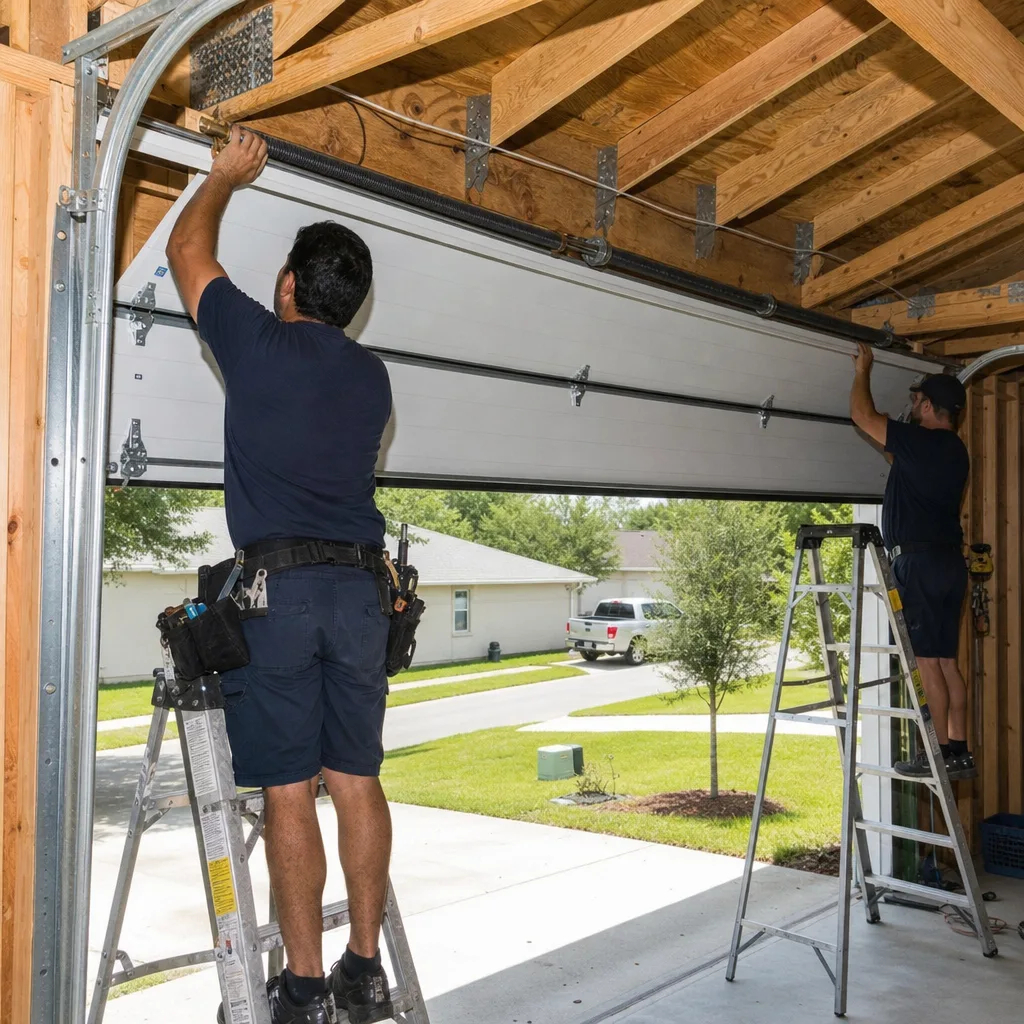
Last updated November 21, 2026
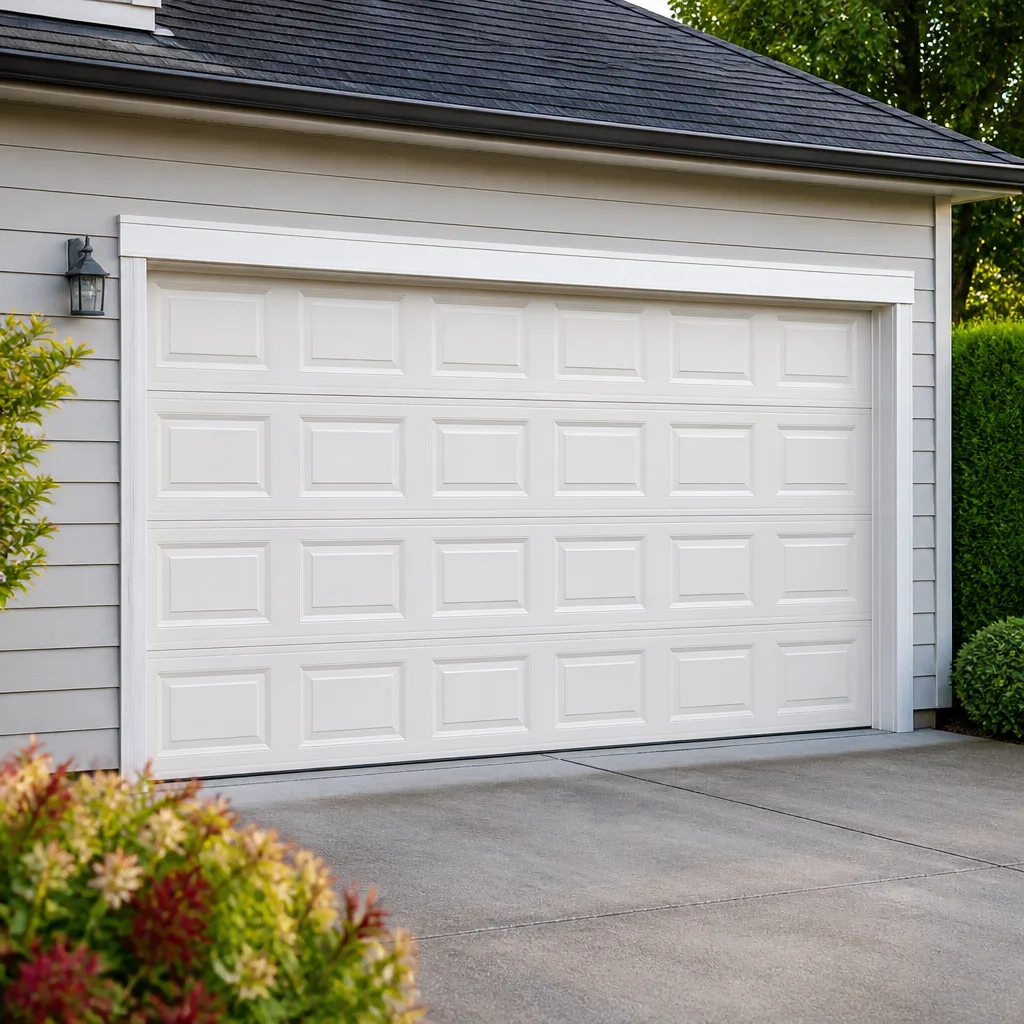 Raised-panel steel
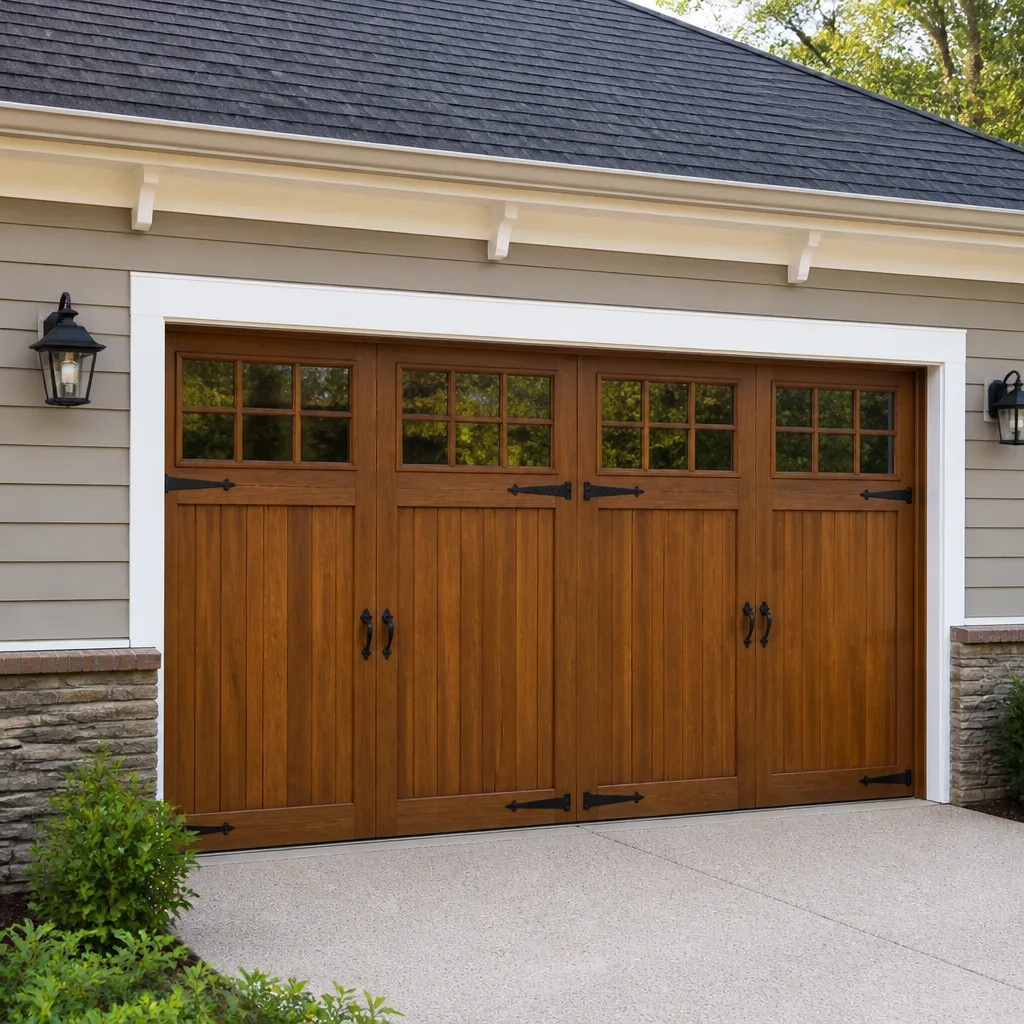 Carriage house
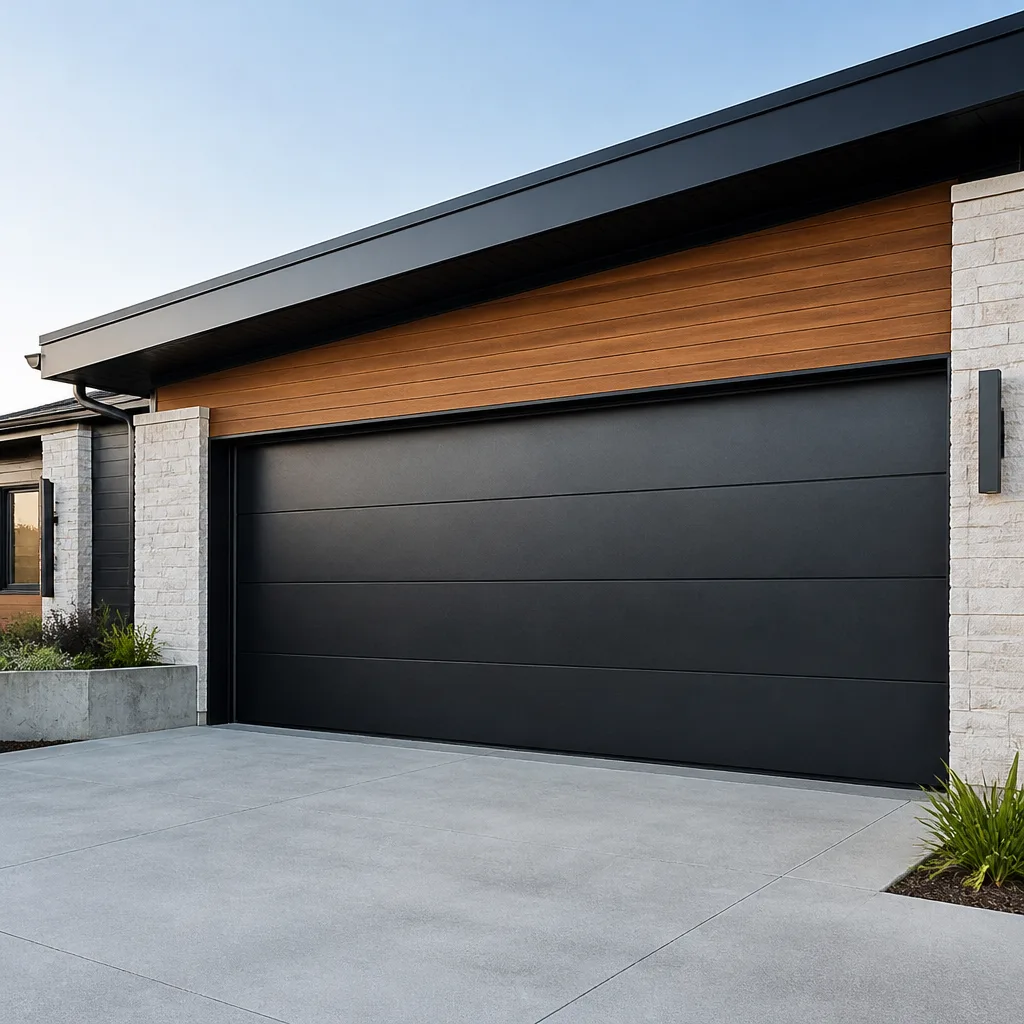 Modern flush
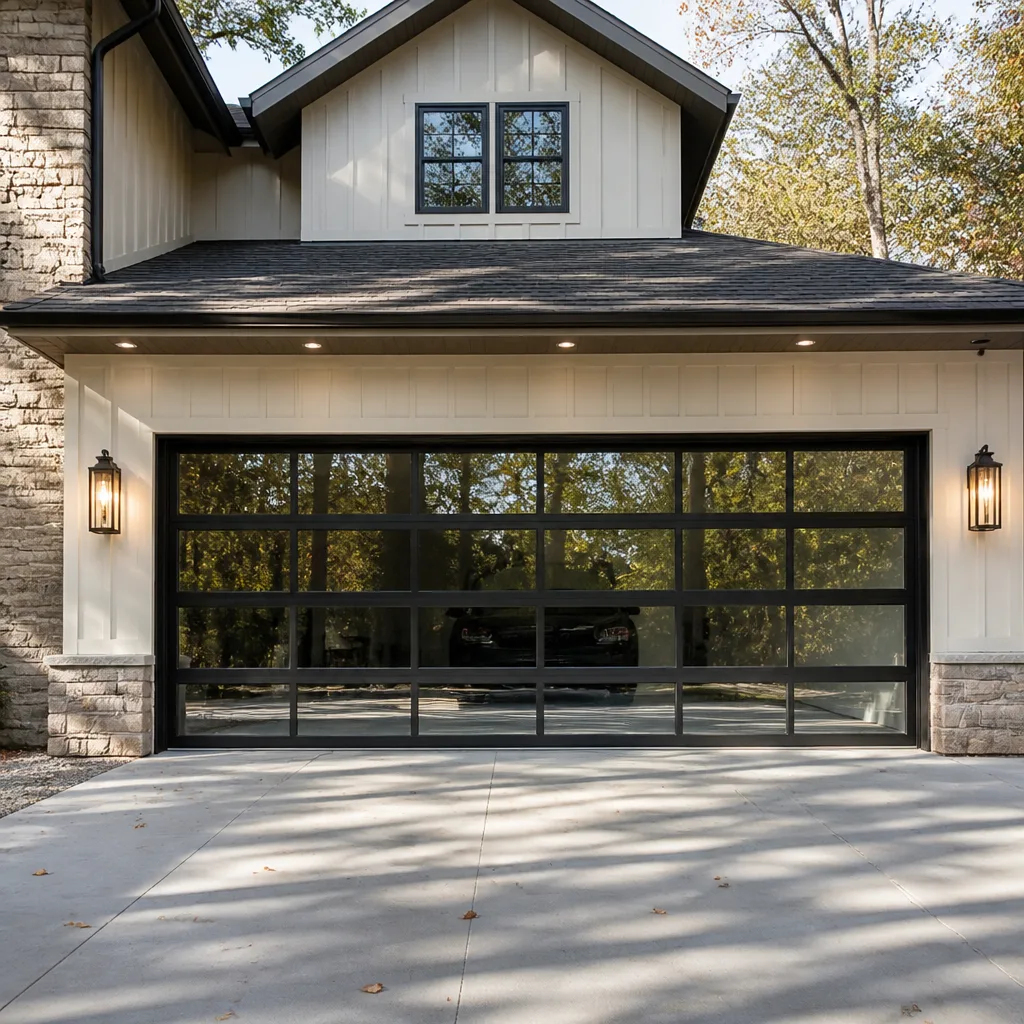 Full-view glass
 LiftMaster openers
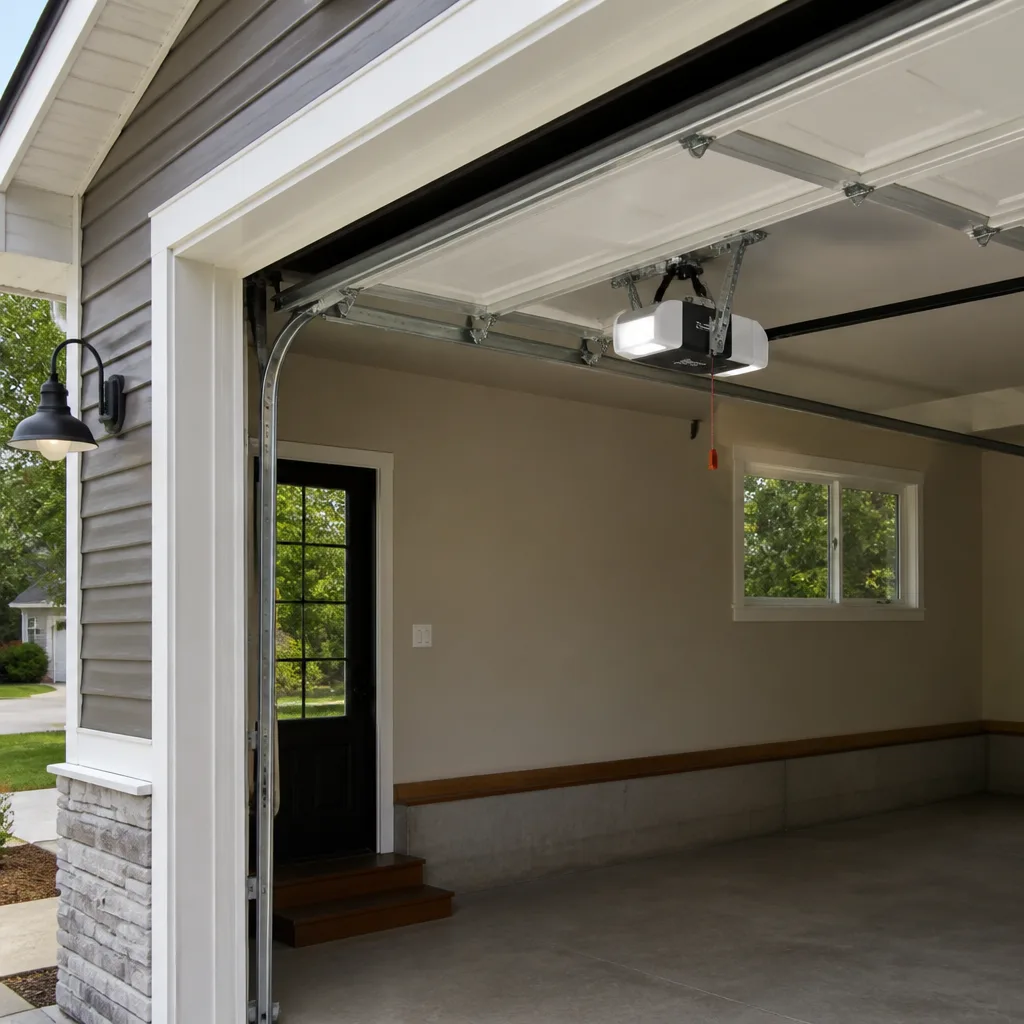 Chamberlain openers
Full 25-point door and opener safety check with every visit - springs, cables, rollers, tracks, and your LiftMaster or Chamberlain opener included
You get a price before we start. It does not change when the pro arrives.
Get your free estimateDIY vs Professional Garage Door: The Ocala Homeowner’s Decision Guide
Most garage door advice splits into two useless camps: “never touch it, call a pro” and “you can fix anything with a YouTube video.” Neither is honest. The real question isn’t whether you’re handy enough. It’s whether the specific task in front of you carries an injury risk that no tutorial can remove. A torsion spring holds enough stored energy to kill someone when it lets go, and that’s physics, not a disclaimer. Swapping a bottom seal or resetting travel limits on your opener? Genuinely safe, genuinely worth doing yourself. This guide draws that line task by task so Ocala homeowners can decide with clear eyes instead of fear or overconfidence.
Quick Answer
Springs, cables, and anything involving the torsion shaft or high-tension hardware require a trained technician; there’s no safe DIY path. Bottom seals, weatherstripping, photo-eye sensors, remote pairing, and travel-limit adjustments are homeowner-safe. Anything that involves replacing the door itself, or work that could void a manufacturer warranty, is worth pricing professionally before you decide. For Ocala homeowners, the dividing line is stored energy, not screwdriver skill.
Styles & brands we work with
- Raised-panel steel
- Carriage house
- Modern flush
- Full-view glass
- LiftMaster openers
- Chamberlain openers
Table of Contents
- Which garage door tasks are genuinely safe to DIY?
- Which tasks require a technician, no exceptions?
- When DIY is doable but voids your warranty
- The Florida permit problem with DIY door replacement
- The real cost comparison: five common repairs
- Tools and parts you can source in Ocala today
- When a botched DIY job raises your final bill
- What Ocala’s climate does to your door
Which garage door tasks are genuinely safe to DIY?
We’re not going to tell you to call us for a squeaky hinge. Plenty of routine upkeep on an Ocala garage door is well within reach of a homeowner with basic tools and a willingness to read the manual. The safe list is short but real, and doing these jobs yourself keeps small problems from becoming service calls.
Homeowner-safe tasks:
- Replacing the bottom seal or threshold. The rubber strip at the base wears out in Florida heat and sun. Slides out of a track, slides back in. No stored energy involved.
- Lubricating hinges, rollers, and the track. A garage door-specific lubricant once or twice a year quiets the door and slows wear.
- Cleaning and realigning photo-eye sensors. If the door reverses for no reason, check that the two sensors at the base are facing each other and free of cobwebs. This is the single most common “broken door” call, and it’s a two-minute fix.
- Pairing a remote or keypad. Every opener brand has a pairing sequence, and it’s in the manual. For LiftMaster and Chamberlain units, the learn button on the motor is all you need.
- Adjusting opener travel limits and force settings. If the door stops an inch short of the floor or reverses on the way down, the limit screws on the opener are the answer. Follow the manual, test the safety reverse afterward, and you’re done.
- Tightening loose track brackets and hinge bolts. A socket set and five minutes. If a bracket has pulled out of the wall, that’s a different story – stop there.
What these tasks share: no springs, no cables, no lifting the door’s weight. If a repair means getting under a tensioned component or taking the door’s weight onto your hands, the safe list ends. Our technicians have up to 14 years of experience and every one of them treats springs as a different category of job, which tells you something about where the line sits.
Which tasks require a technician, no exceptions?
Torsion springs, extension springs, and the cables that run with them are not a skill test. They are a stored-energy problem. A torsion spring on a standard residential door holds hundreds of pounds of tension, and when it releases uncontrolled it doesn’t give you time to move. No tutorial changes that. The tools alone, a proper winding bar and the knowledge of how many turns a spring is wound, are not things a homeowner should be improvising.
The do-not-touch list:
- Replacing torsion or extension springs. Both store energy. Both can kill. Call a technician.
- Replacing or adjusting lift cables. Cables are under the same tension and can snap with whip-crack force.
- Replacing rollers on a door with tensioned springs. It sounds simple; getting the door into a safe position to do it is where people get hurt.
- Straightening a bent track. A track carries the door’s full weight. If it’s bent, the door can come off it.
- Replacing a broken hinge attached to a spring plate or cable bracket. Some hinges are structural. Ask before you wrench.
- Replacing the door itself, or a section of a sectional door. Panels weigh far more than they look, and a dropped panel injures hands and feet.
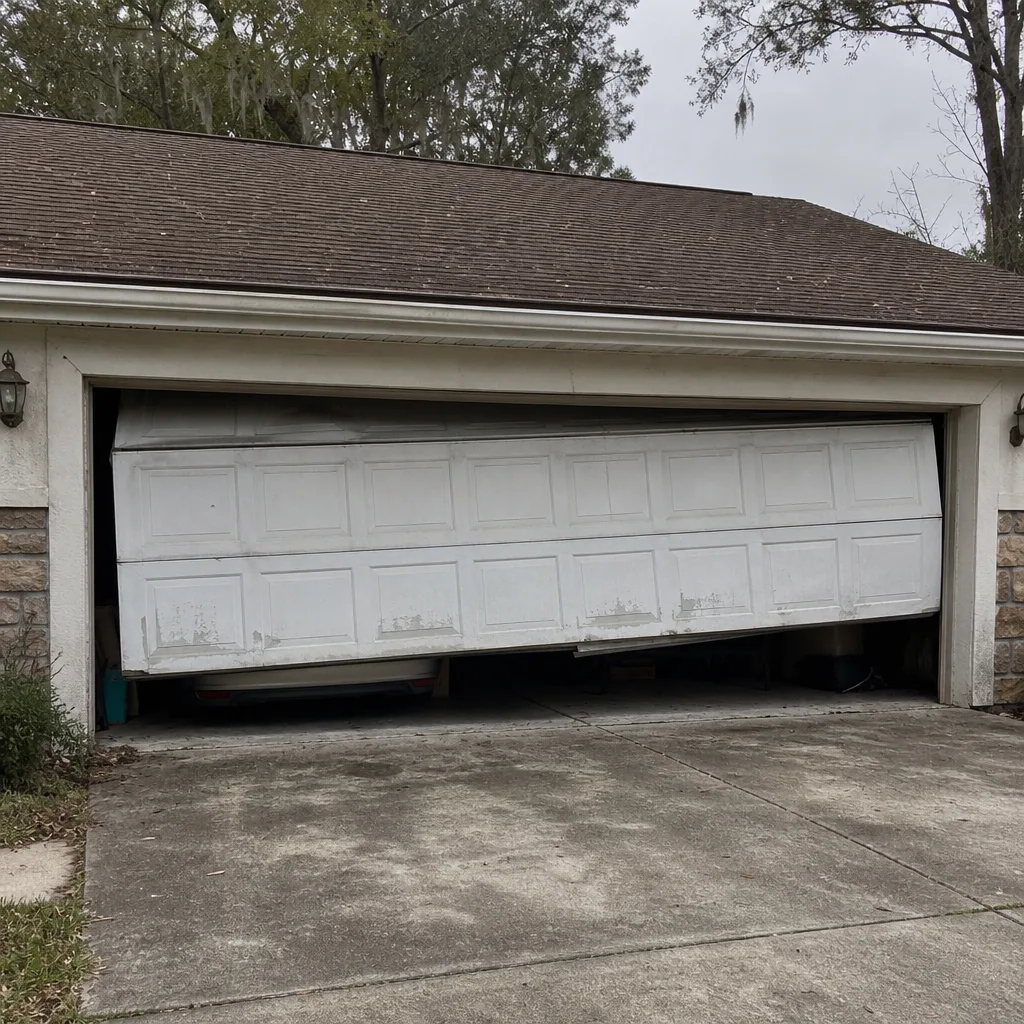
- Any job where the door won’t stay in position. If the door falls, sags, or won’t hold, the spring system is likely compromised. That’s an emergency call, not a DIY afternoon.
On this list, the pattern is the same: springs, cables, and anything that carries the door’s weight. If you’re in doubt about whether a job sits on this side of the line, it probably does. Our garage door repair team fields these calls constantly and can tell you over the phone whether your issue is a DIY task or a technician job.
When DIY is doable but voids your warranty
Some repairs are physically within a homeowner’s ability and still a bad idea because of what they do to the manufacturer’s warranty. This is the gray zone, and it’s where homeowners get burned quietly. The job works, nothing breaks, and six months later a warranty claim on the opener gets denied because the housing was opened or a part was replaced with a non-approved one.
Where warranties get voided:
- Opening the opener motor housing. Most manufacturers specify that internal work be done by a qualified technician. Breaking the seal on a Clopay or Amarr door component or opening a LiftMaster motor can void coverage on that part.
- Installing non-OEM parts on a door still under warranty. Aftermarket springs, rollers, or hinges can be flagged. If you’re going to DIY, use the brand’s own replacement parts.
- Adjusting force settings beyond the manual’s range. Cranking force up to compensate for a binding door masks the real problem and can cause the opener to close on an obstruction without reversing.
- Cutting, drilling, or modifying a door panel. Any modification to a sectional door panel can void the warranty on the whole door, not just the panel.
Before you take anything apart, find the warranty document. If you can’t find it, assume the safest course is to keep the work within the homeowner-safe list. When a warranty question is in play, our garage door opener repair service can confirm what your brand allows before you open anything up. Brands like Wayne Dalton and Craftsman have their own limits, and we work on both.
The Florida permit problem with DIY door replacement
Here’s the part of DIY replacement that doesn’t show up until years later. In most Florida jurisdictions, replacing a garage door is a permitted job, because the door is part of the wind-load envelope of the house. Skip the permit and the door still works. The problem surfaces at the worst possible moment: when you sell the house or file an insurance claim, and a permit search turns up nothing for the door replacement. That’s a chain-of-title issue, and it’s exactly the kind of thing that stalls a closing in Ocala.
What’s involved:
- Ask the city’s building department first. Ocala and Marion County handle permits through their own building departments, and requirements vary by jurisdiction and by the door’s wind rating. Call or check their website before you order a door.
- Keep the paperwork. If a permit is required and you pull it yourself, keep the inspection sign-off with the door’s documentation. Without it, you have no proof the install was approved.
- Match the door’s rating to the opening. Florida requires doors rated for the wind zone where they’re installed. A door sold without a rating, or installed below the required rating, is a problem at resale and at claim time.
- Insurance carriers look for the rating label. If a carrier can’t confirm the door’s rating, they may take a different view of the property than you expect.
For replacement work, this is the one place where we’d tell a confident DIYer to get a professional quote before deciding. Our garage door installation service handles the permit question as part of the job. It’s not about the install being difficult, it’s about the paper trail being complete. A written estimate costs nothing and tells you what you’re saving versus what you’re risking.
The real cost comparison: five common repairs
Let’s be honest about the math. Professional garage door repair isn’t always cheaper, but it usually is once you add up parts, tools, time, and risk. Below are the five most common repairs we’re called for, with an honest accounting of both paths. The professional ranges shown are typical estimates, not fixed prices, and the written estimate sets the final number before any work starts. For context on what’s standard in Ocala, our Ocala Garage Door Repair Pros team quotes every job in writing before a wrench is turned.
- Bottom seal replacement: Parts $20-$40 DIY vs. $125-$200 professional. If you have the tools already, DIY wins here. The professional range reflects travel and installation, not a hard job.
- Photo-eye realignment: $0 DIY vs. $95-$150 professional. Almost always a DIY fix. Call if realigning doesn’t solve it.
- Torsion spring replacement (one spring): $90-$150 in parts alone, plus tools you’ll likely never use again, plus injury risk. Professional: $180-$340. A matched pair runs roughly double, and pairs are usually replaced together. The professional path is only about $90-$200 more than the parts alone, and it comes with the job done safely.
- Cable replacement: $40-$70 in parts. Professional: $150-$280. Cables are on the do-not-touch list because of stored energy, so DIY isn’t a real option here.
- Opener replacement (with opener repair being the cheaper alternative): $150-$300 for a LiftMaster or Chamberlain model, plus your afternoon. Professional install including the opener: $350-$650. If the opener is working but the door isn’t, opener repair at $150-$300 is the cheaper call and worth diagnosing first.
Add time and risk honestly. An experienced technician spends 30-60 minutes on the spring job. A homeowner spends a Saturday morning reading, buying tools, and probably watching a video twice, and that’s if the job goes cleanly. When the job doesn’t go cleanly, the professional cost goes up, not down.
Where DIY wins most: seals, sensors, remotes, force settings, hinges, and simple lubrication. Where professional wins clearly: springs, cables, tracks, and installation. That’s the whole decision tree, and it’s the same for a homeowner in Ocala as anywhere else.
Tools and parts you can source in Ocala today
For the tasks worth doing yourself, you don’t need a specialty supplier. A basic tool kit and one trip to an Ocala hardware store cover it. Here’s the actual shopping list and where it’s easiest to find it around town.
Tools for homeowner-safe jobs:
- Socket set (or adjustable wrench) – for tightening brackets and hinge bolts.
- Power drill and driver bits – for bottom-bracket adjustments and seal replacement.
- Replacement bottom seal – measure the door’s width and the seal type first. Every hardware store in town carries the standard profiles, and the box usually lists the door brands it fits.
- Garage door lubricant – the specific silicone or lithium type, not WD-40 for this job. Most Ocala auto parts and hardware stores stock it.
- Spirit level and a tape measure – for verifying photo-eye alignment and door weatherstripping.
- Owner’s manual – the real tool for travel-limit and force adjustments. Every opener has a model number printed inside the light cover, and that’s how you find the current manual online.
Where to source in Ocala:
- Ocala Hardware & Supply and national chains on SR 200 and Pine Ave – basics like seals, lubricants, and brackets.
- Auto parts stores throughout Ocala – the garage door lubricants and photo-eye replacements.
- Direct from the brand – for Clopay, Amarr, Wayne Dalton, or Craftsman OEM parts, order from the manufacturer or an authorized dealer. Local retail often only carries universal parts.
Don’t overbuy. A homeowner who lubricates twice a year, replaces the bottom seal when it tears, and keeps the photo eyes clean will stretch the door’s life without needing a service call. Anything beyond that list is where we get involved.
When a botched DIY attempt raises your final bill
The most expensive garage door calls we handle are the ones where somebody already tried. Not because we charge more for the fix, but because the fix is genuinely bigger than the original problem. A $150 cable replacement becomes a $400 track realignment because the door came off the track while it was being wrestled with. A $200 spring job becomes a $600 door because a winding bar slipped and bent the torsion shaft.
The specific mistakes that escalate:
- Adjusting the force setting to fix a binding door. The opener now pushes harder, and the bind eventually shears a hinge or bends a panel. Force settings compensate for the door’s weight, not for a problem.
- Straightening a bent track with a hammer. Tracks carry the door’s full weight, and a slightly bent track won’t roll square. The next big thing is a door off its track. Structural track work is a technician job.
- Replacing a spring with the wrong size. Spring size is matched to door weight. An undersized or oversized spring makes the opener work harder than it’s rated for, shortens the opener’s life, and can fail within weeks.
- Pulling a cable out of the drum. Cables on a tensioned door wrap around a drum. Getting one off means getting the spring into a safe position. Improvising this is the single most common way a homeowner gets hurt.
- Loosening hinges with the door down. Some hinges are structural. If the door isn’t in a safe position when a structural hinge lets go, the door can sag or drop. Only open with a technician guiding the process.
- Cutting a track to shorten the door’s travel. Never trim a track to fit a new opener. The track length matches the door’s travel, and a shortened track means the door won’t open fully.
- Running the opener after a spring breaks. Openers are not designed to lift a door without springs. A homeowner who keeps cycling the door to see if it will work will burn out the opener motor within a few cycles.
None of these are unusual mistakes. They’re what happens when a homeowner, understandably, tries to save money on a job that carries risk they can’t see. We don’t lecture our customers about it. The fix is the fix. But the honest cost comparison in this guide only works if the DIY path includes the realistic cost of a do-over, and for springs and cables, the do-over rate is high.
What Ocala’s climate does to your door
Ocala’s weather shapes which garage door parts fail and how fast. Our summers are long and humid, our winters are mild enough that freeze damage isn’t a factor, and the sun does most of the wear. Understanding that puts the DIY decision in context, because a lot of what looks like a repair problem is really a maintenance problem Ocala homeowners can handle themselves.
Where the weather hits:
- Bottom seals and weatherstripping dry out from heat and sun exposure, and crack well before they wear out from use. Replacing them is one of the most common DIY jobs, and it’s genuinely worth doing because a bad seal lets in the summer heat.
- Wood doors swell and warp in the humidity, and paint peels faster than in drier parts of the state. A wood door that sticks might just need paint and lubricant, not a service call.
- Metal components oxidize unexpectedly because of the humidity and rain, so hinges and rollers prefer a lubricant that stays in place and repels moisture.
- Wind events are the seasonal reality in Marion County, and a door rated for wind matters more than the average homeowner realizes. Related damage from limb impacts or debris often looks like “the door just stopped working.”
- The high summer sun bakes metal doors, and paint fades or peels on the south-facing doors. Repainting is a homeowner job; checking the door’s balance afterward isn’t.
The upshot for our area: the safe-DIY list actually gets a little longer in Ocala, because maintenance catches more of what fails here than it would somewhere with harsher winters. Springs and cables, though, fail from cycle count and age, not weather, so the safety line stays exactly where it is.
Common Mistakes to Avoid
- Attempting a torsion spring replacement without the right tool. A wrench or pliers will not do the job of a proper winding bar. The stored energy is the problem, and it’s the reason this job sits on the do-not-touch list.
- Ignoring the door’s safety reverse until it fails. The auto-reverse test (put a board in the door’s path and confirm the door reverses) should be run monthly. In Ocala, where doors and openers run hard, this is the one check that prevents the worst outcome.
- Buying a replacement door without checking the wind rating. Florida’s building departments and insurers look for the rating first. A door below the required rating is a problem the day you install it, not a problem you fix later.
- Skipping the permit on a door replacement. In Ocala and Marion County, this surfaces at sale or at claim time. Ask the building department before you order.
- Letting a “small” issue become a bigger one. A dragging door, a bent track, or an opener that labor to lift are all early warnings. Waiting until something breaks usually costs more than fixing the early warning.
- Using WD-40 as a garage door lubricant. It’s a solvent, not a lubricant for this application. Use the garage-door-specific product.
- Running the opener after a spring breaks. Stop cycling the door. The opener cannot lift a door without springs, and running it risks burning out the motor.
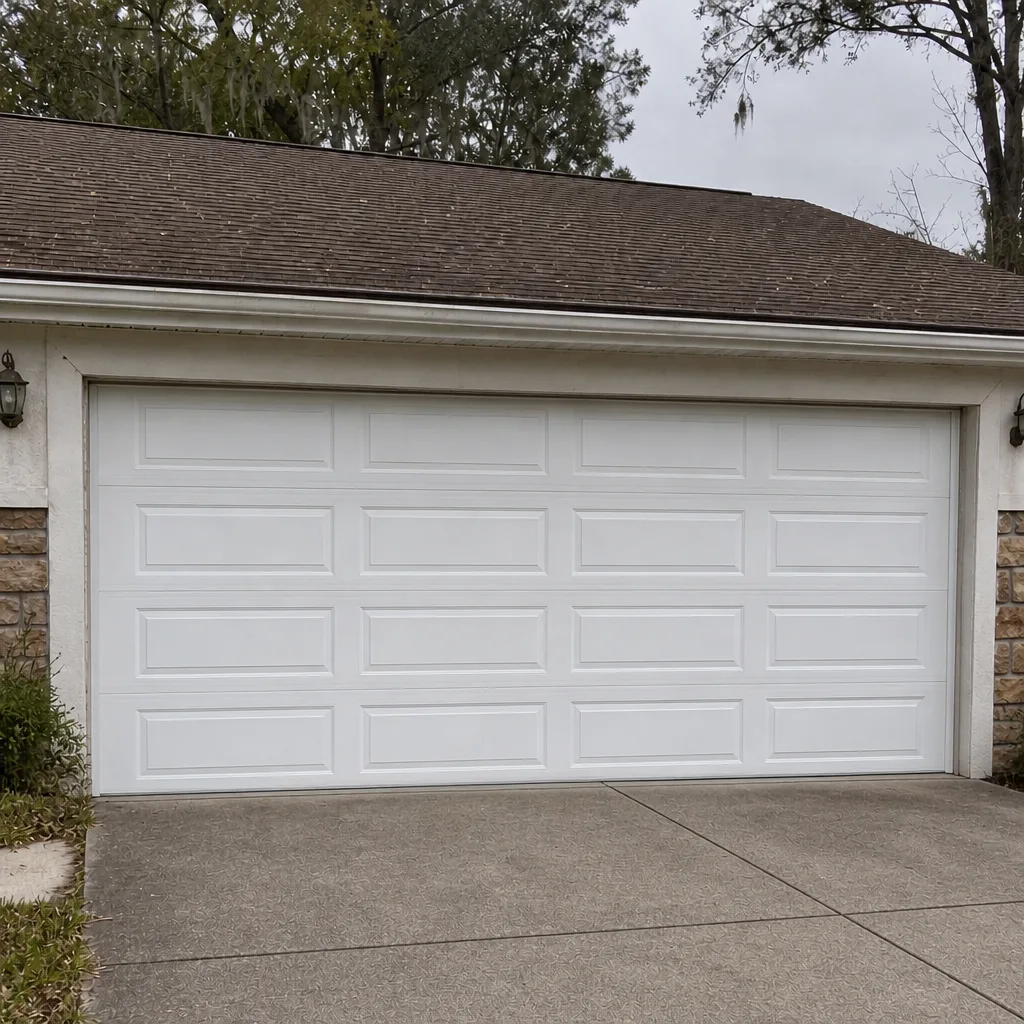
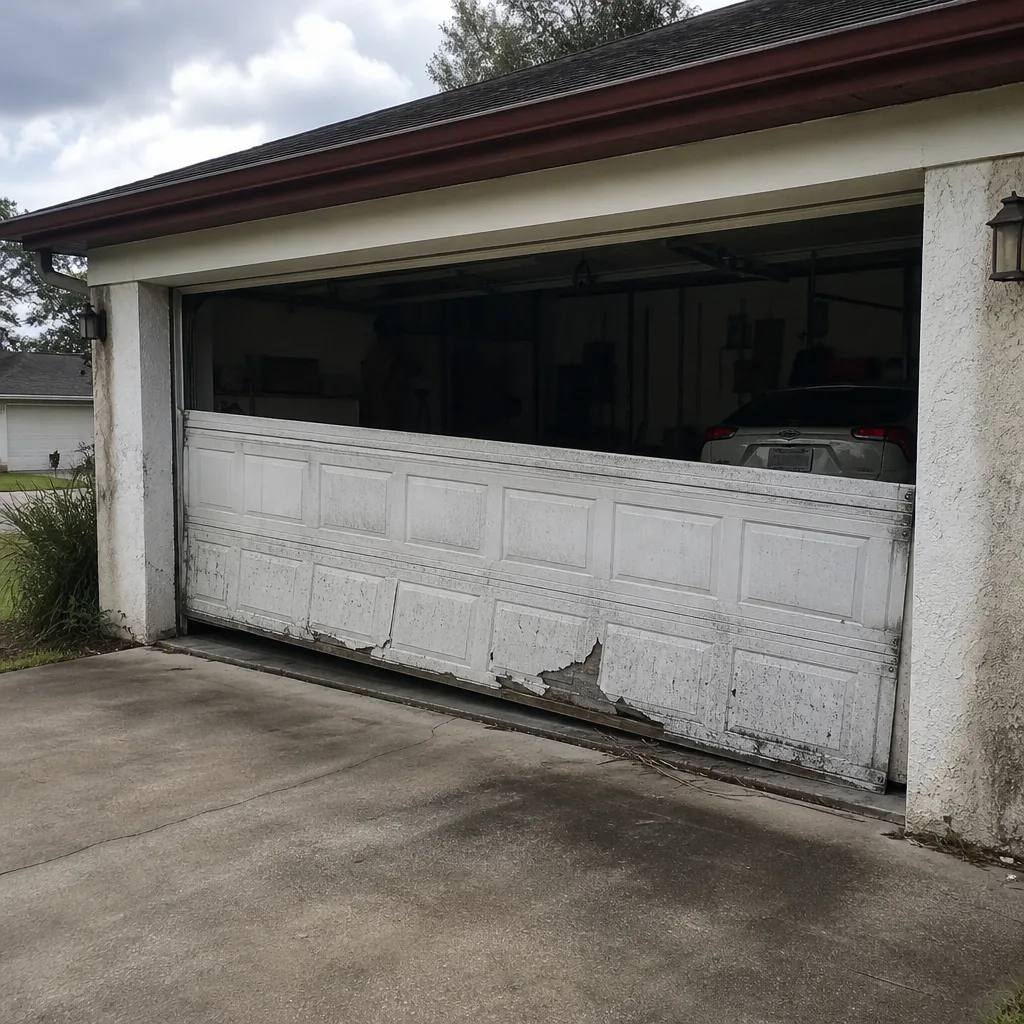
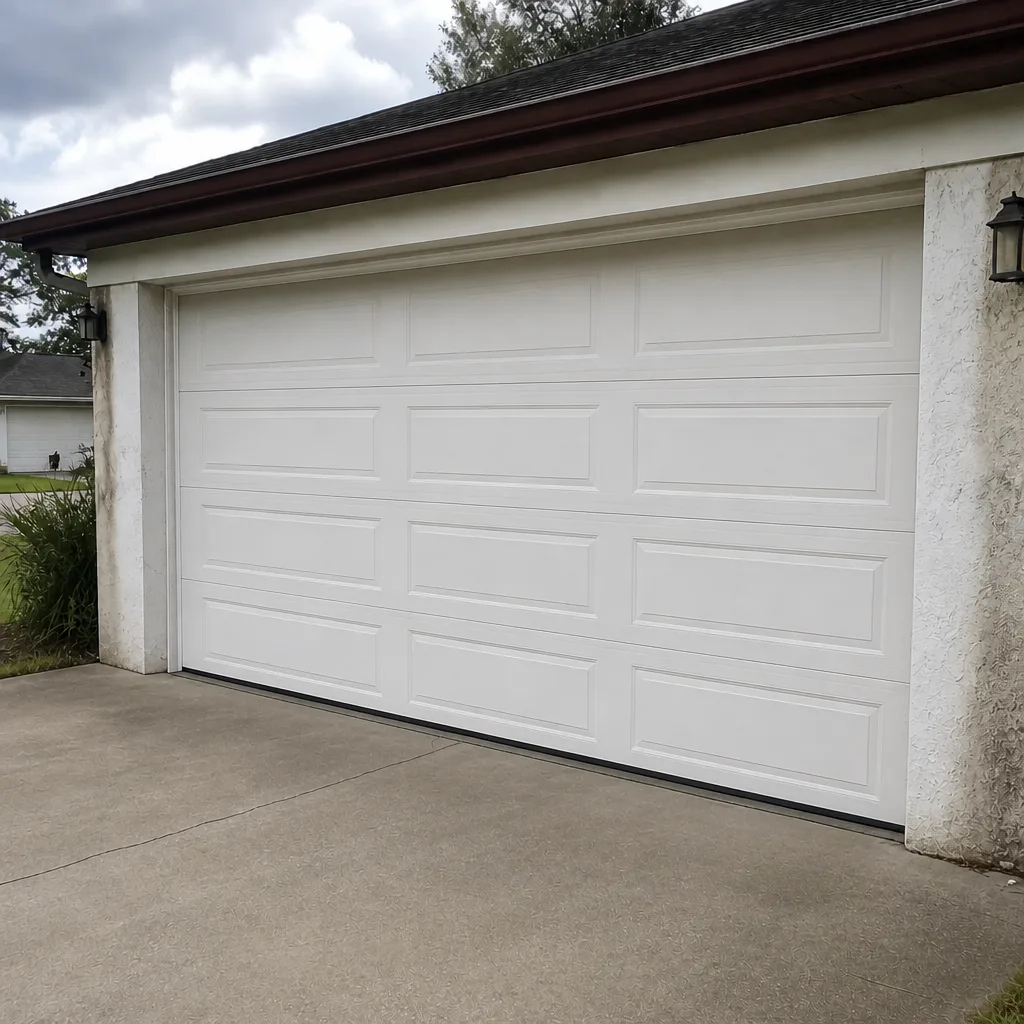
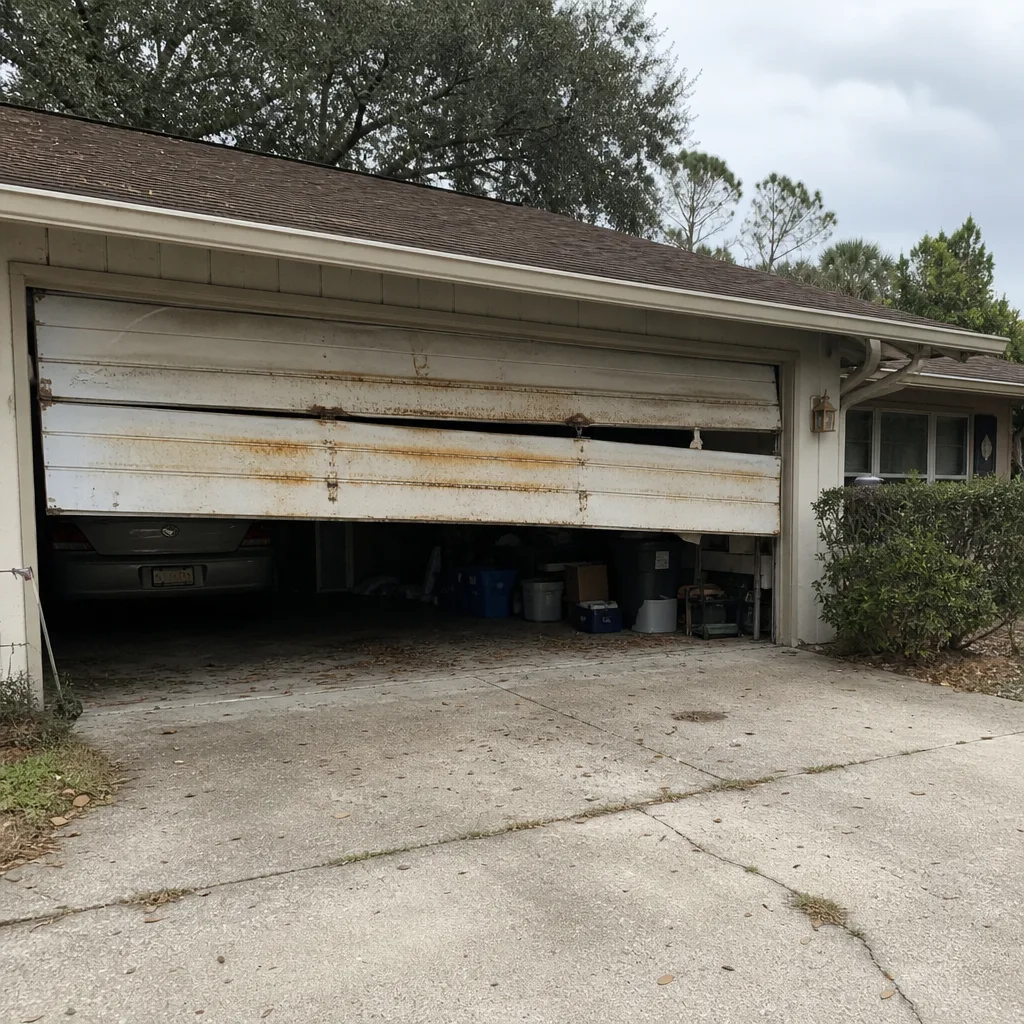
See the difference
 Before
 After
 Before
 After
 Before
 After
When to Call a Professional
Call a professional the moment the job involves springs, cables, tracks, or the door’s own weight. Call when the door won’t hold position, when it comes off its track, when the opener runs but the door doesn’t move, or when a broken component leaves the house unsecured. Call if you’re replacing the door itself, because the permitting and wind-rating questions are part of the job. Call if it’s a warranty question and you don’t want to make the wrong call. And call if you’ve already tried and the problem got worse, which happens more than homeowners expect.
Ocala Garage Door Repair Pros offers free estimates in Ocala – call (844) 497-0351. We work on all eight major brands, and we’re available for emergency service when a door has to be secured or a car is trapped. Our technicians have up to 14 years of experience, and every one of them focuses only on garage doors.
Frequently Asked Questions
No. Torsion and extension springs store enough energy to be lethal if released uncontrolled, and no tutorial removes that risk. The job requires proper winding bars and a working knowledge of how much tension the door needs, and a mistake can injure seriously or kill. Call a trained technician for any spring work. Call (844) 497-0351 for an exact quote – estimates are free.
Torsion spring replacement typically costs $180-$340 for one spring, with a matched pair running roughly double because pair replacement is standard. The written estimate sets the final price, and it’s quoted before any work starts. Call (844) 497-0351 for an exact quote – estimates are free.
Physically, some homeowners can. Practically, in Florida, the answer is usually no, because the door is a permitted component and the install needs the right wind rating for the opening. Skipping the permit creates a paper trail problem at resale or at claim time, and it’s not a problem you can fix later without taking the door down. A written estimate tells you what the professional route costs before you commit.
Yes, in most cases. A bottom seal is a $20-$40 part and a straightforward DIY job, while a professional install typically runs $125-$200. This is one of the jobs we’d tell you to do yourself. Save the service call for springs, tracks, and openers.
In most cases, yes. We treat a door that’s off its track or stuck in the open position as an emergency, because the house is unsecured. We’re not limited to standard business-hour appointments. Call (844) 497-0351 and we’ll confirm timing.
Yes. Those four are part of the eight brands our technicians are trained on. We also service LiftMaster, Chamberlain, Genie, and Raynor, so the brand already in your home is one we know. Having the right parts and the right technique for your brand is often the difference between one visit and several.
Not without your agreement. We quote a written price before any work starts, and if we find something that changes the job, we explain it and confirm before we proceed. You should never see a bill above the quote without knowing why in advance.
The Bottom Line
The DIY decision for your garage door comes down to stored energy, not skill level. Bottom seals, photo eyes, remotes, travel limits, and basic lubrication are homeowner-safe and worth doing yourself. Springs, cables, tracks, and door replacement belong with a technician, partly because of the injury risk and partly because of Florida’s permit and warranty requirements. Work the safe list first and you’ll defer real problems. Know where the line sits and you’ll never DIY yourself into a bigger bill. For Ocala homeowners, the honest cost math usually favors professional work on the safety-critical jobs and DIY on the maintenance jobs. That’s the whole guide.
Contact Us for a Free Estimate
If you’ve read this far, you probably know which side of the line your project is on. For the technician jobs, we’re the right call: garage door specialists, not generalists, with trained hands on the eight brands homeowners actually own. For the DIY jobs, keep the list handy and save the wrench. When you’re ready to know what a professional would charge, call (844) 497-0351 for a free estimate. Written price, before any work starts, every time.
Written by the team at Ocala Garage Door Repair Pros.