Last updated November 21, 2026
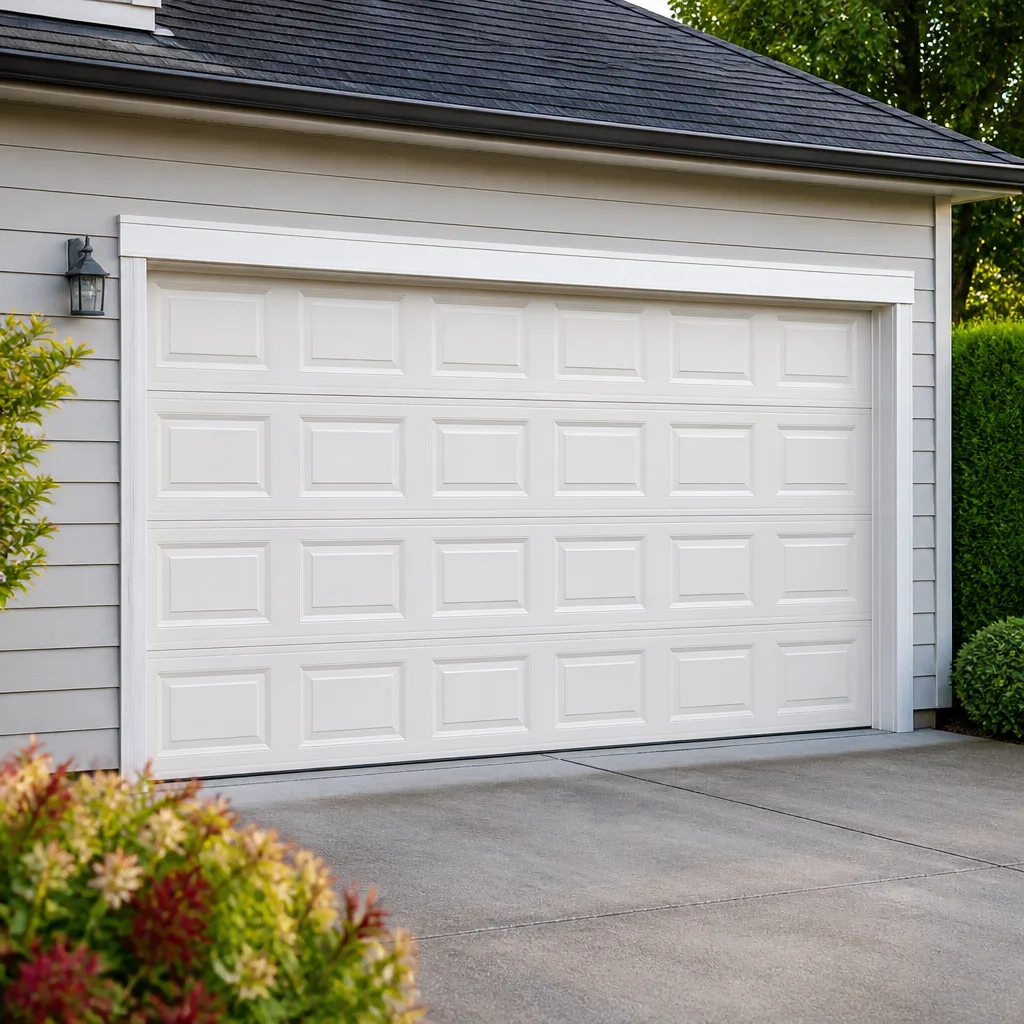 Raised-panel steel
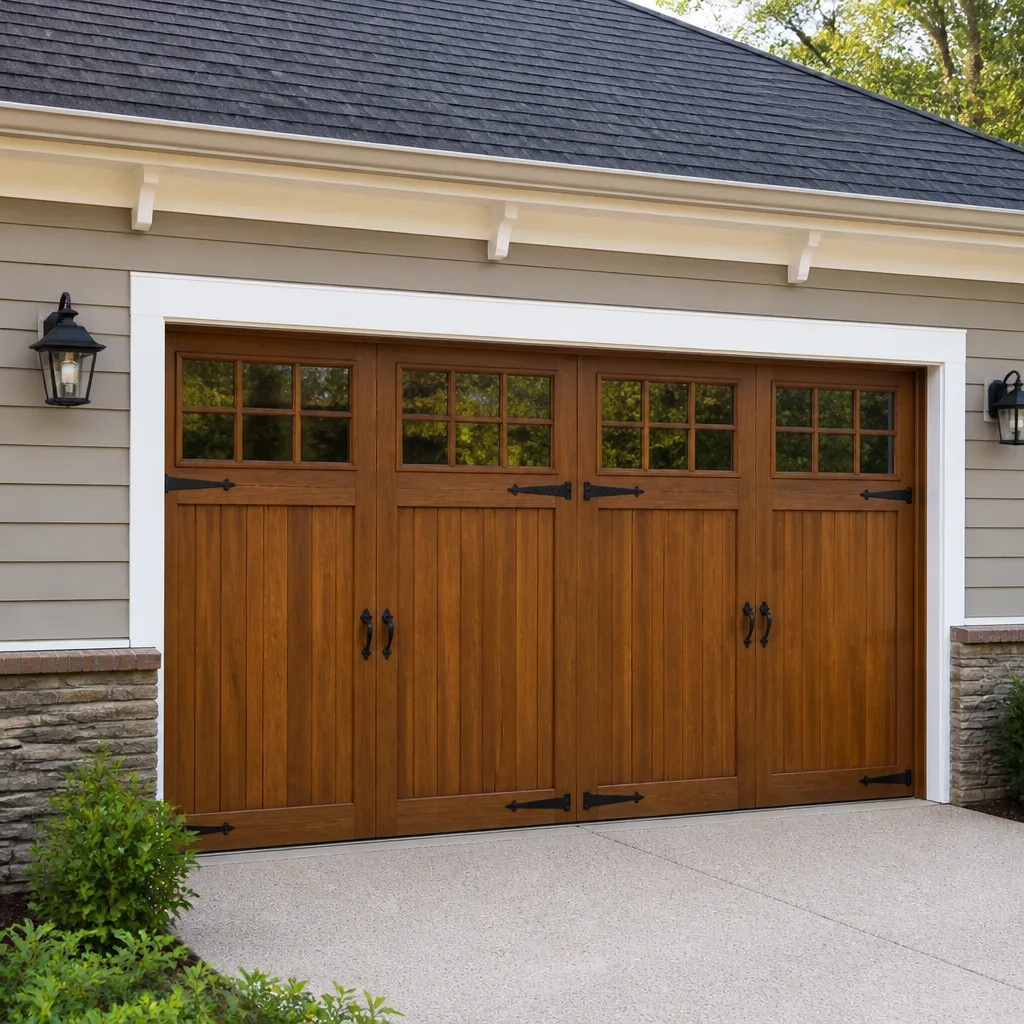 Carriage house
 Modern flush
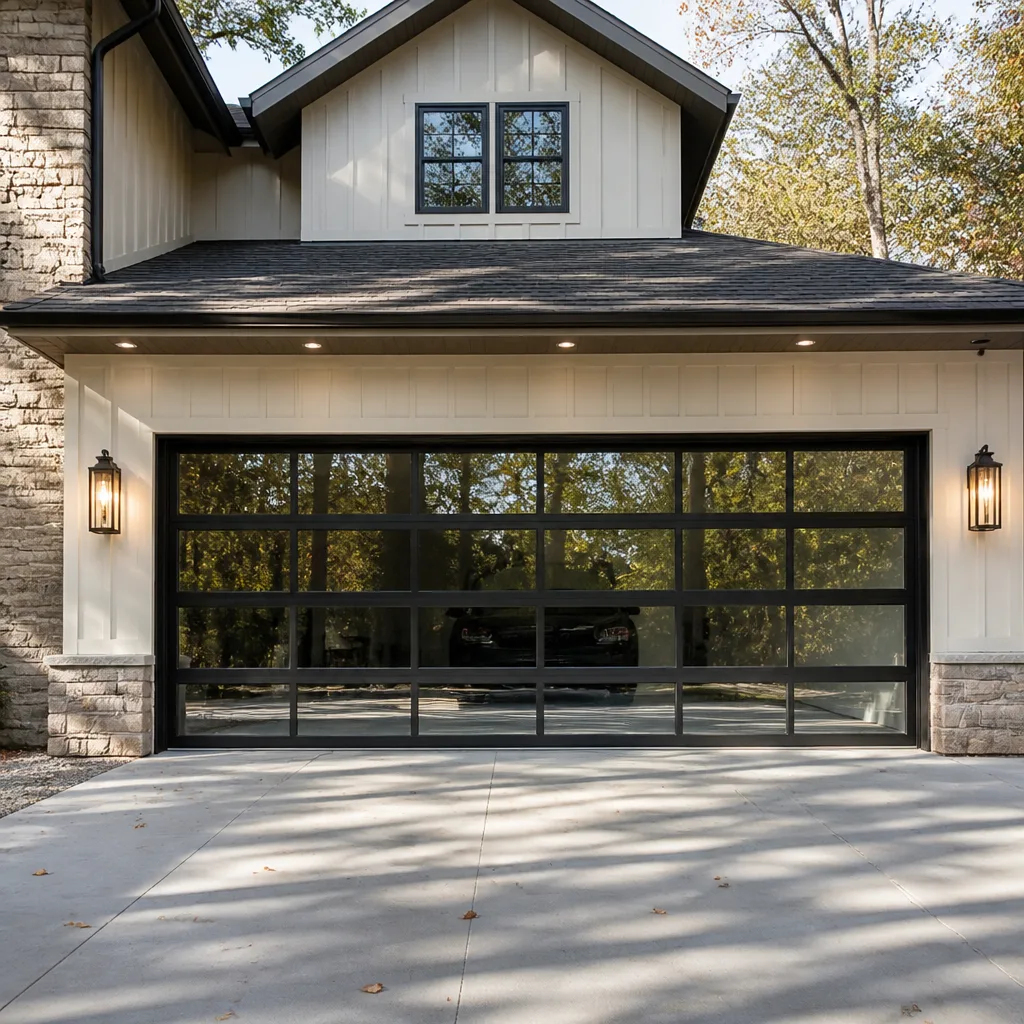 Full-view glass
 LiftMaster openers
 Chamberlain openers
Full 25-point door and opener safety check with every visit - springs, cables, rollers, tracks, and your LiftMaster or Chamberlain opener included
You get a price before we start. It does not change when the pro arrives.
Get your free estimateGarage Door Permits, Codes & Inspections in Ocala, FL: What You Need to Know
Most homeowners assume a garage door permit is paperwork for its own sake. In Ocala, it’s the opposite. A garage door is one of the largest moving assemblies on a house, and when a named storm pushes against it, that door is part of the building’s protective envelope. A non-compliant replacement can complicate an insurance claim and surface as a problem during a home sale, because the record of a compliant installation is often what proves the work was done to code. This guide walks through when Marion County requires a permit, what Florida Building Code wind load rules mean for a door, what inspectors check, how HOA approval fits alongside the county process, and what “hurricane-rated” actually means on a label.
Quick Answer
In Ocala and the rest of Marion County, a full garage door replacement usually requires a permit because the door is rated for wind load under the Florida Building Code, while a same-size like-for-like swap can sometimes avoid one depending on the door’s rating and how the county classifies the work. Small repairs, spring and opener work, and adjustments generally do not require a permit. Always confirm with Marion County’s building department before work begins, because the final call rests with the local authority having jurisdiction.
Styles & brands we work with
- Raised-panel steel
- Carriage house
- Modern flush
- Full-view glass
- LiftMaster openers
- Chamberlain openers
Table of Contents
- When Does Marion County Require a Garage Door Permit?
- Florida Building Code Wind Load Requirements and Your Ocala Address
- What a Marion County Garage Door Inspection Actually Checks
- HOA Approval and County Permits: Running Both Without Doubling Your Timeline
- What “Hurricane-Rated” Really Means on a Garage Door Label
- The Permit and Inspection Process Step by Step
- Why the Permit Record Matters When You Sell
When Does Marion County Require a Garage Door Permit?
The short version: a replacement usually needs one, a repair usually doesn’t, and a like-for-like swap is the gray area that catches homeowners off guard. The threshold that triggers a permit in Marion County is generally whether the work changes the door’s rated wind-load performance or its attachment to the structure. Swapping a door for an identical model with the same rating and the same track and hardware can sometimes be handled as a maintenance item. Installing a different door, a heavier door, or a door with a different wind rating typically crosses into permitted work.
Here’s how the three categories usually split:
- Full replacement with a new door or new rating: usually permitted, because the wind load rating and attachment details change.
- Like-for-like swap of an identical rated door: sometimes permitted, sometimes not, depending on how the county reads the scope. Ask before you order.
- Repair only: spring replacement, opener repair, roller and hinge replacement, track adjustment, and cable work generally fall outside permit territory.
If you’re weighing repair against replacement, our guide to garage door repair covers what’s fixable and what isn’t. For the permit question specifically, one phone call to Marion County’s building department resolves it faster than any rule of thumb. Describe the exact door, the size, and whether the rating is changing. That’s the information they need to tell you yes or no.
Why the Threshold Exists
A garage door replacement isn’t a cosmetic job. The door, tracks, and hardware are bolted into the framing, and the whole assembly is rated to resist a specific pressure. When a door is swapped for one with a different rating or a different mounting system, the building’s rated performance changes with it. The permit exists so that change gets reviewed by someone other than the person selling the door.
Florida Building Code Wind Load Requirements and Your Ocala Address
Florida Building Code Section 1609 governs wind loads on buildings, and garage doors fall under its reach because they’re part of the exterior envelope. What matters for your Ocala property is the design wind speed assigned to your address, because that number sets how much pressure the door and its anchoring have to resist. Design wind speed isn’t one number for the whole county. It’s mapped by location, and it can shift between areas within Marion County.
Here’s how to find what applies to you:
- Start with Marion County’s building department. Give them the property address and ask for the design wind speed that applies to your parcel.
- Ask whether the property is in a wind-borne debris region, since that changes what door ratings are acceptable.
- Take that number to the door supplier and ask for a door rated to meet or exceed it. The manufacturer’s evaluation report or product approval should list the rating.
- Keep the door’s product approval documentation with your permit file. Inspectors and future buyers both want to see it.
This is where a brand-specific conversation matters. Companies that work across multiple manufacturers, like those servicing Raynor or LiftMaster products, can usually tell you which models carry the ratings appropriate for a given wind speed. We work on the brand already in your home, which means we can often match a rating without pushing you toward a door you didn’t ask for.
What we’ve seen repeatedly in Ocala is a homeowner buying a door off a big-box shelf without checking the rating against the address, then discovering at inspection that the numbers don’t line up. The fix is to confirm the rating before the door is ordered, not after it’s on the wall.
What a Marion County Garage Door Inspection Actually Checks
When a garage door installation goes through the permit process, the inspector is verifying that the installed assembly matches what was approved and that it performs as rated. It’s not a cosmetic review. Here’s the checklist that typically comes into play, and it’s worth understanding before the inspector arrives:
- Door matches the approved product approval. Make, model, and rating on the label should line up with what the permit application listed.
- Wind-load rating is appropriate for the address. The design wind speed for the parcel has to be met or exceeded by the door’s rating.
- Attachment and anchorage. The tracks, brackets, and hardware are checked for the method and fasteners specified for that rated door, not substituted with whatever was on hand.
- Headroom and track configuration. The installation has to match the approved layout so the door operates within its rated parameters.
- Reinforcement where required. Rated doors often need specific struts or reinforcement; the inspector checks that they’re present and correctly placed.
- Label and documentation visible. The door’s rating label and product approval paperwork are part of the record and need to be available.
- Operational function. The door needs to open and close correctly with the opener installed, and safety features on the opener have to be in place.
Notice what’s not on that list: spring tension and balance. Those are safety and function concerns we take seriously on every job, but the permit inspection is centered on the rated building envelope. If a spring or opener issue comes up during the process, it gets handled as a separate repair.
HOA Approval and County Permits: Running Both Without Doubling Your Timeline
Many Ocala neighborhoods and communities have HOA architectural review requirements that run in parallel to the county permit. They’re separate approvals with separate timelines, and the most common delay we see is a homeowner starting the county process before HOA sign-off, then having to change the door style and refile. The practical move is to get both processes moving at the same time, with the same door specifications, so neither side is waiting on the other.
A workable sequence:
- Pick the door and confirm its rating against your address’s design wind speed.
- Submit the HOA architectural request with the door’s spec sheet, color, and rating documentation.
- Apply for the county permit using the same specifications.
- Hold the order until both approvals are in writing. A door ordered against a pending HOA review is a door you might have to return.
- Schedule the install and the inspection once the door arrives and the permit is issued.
HOA rules vary widely. Some communities restrict panel styles, colors, or window configurations. Knowing those restrictions before you fall in love with a door saves a lot of backtracking. If you’re early in the process, our page on garage door installation covers how a measured install normally runs, including what we ask for before an order is placed.
What “Hurricane-Rated” Really Means on a Garage Door Label
“Hurricane-rated” is a marketing phrase, not a legal designation. What actually matters is whether the door carries a product approval or evaluation that demonstrates it meets the wind-load requirement for your specific address under the Florida Building Code. A door can be called hurricane-rated and still not be appropriate for a parcel with a higher design wind speed. The label and the paperwork are the real proof.
What to look for:
- A product approval or evaluation report that names the door model and the wind pressures it’s rated to resist.
- A rating that meets or exceeds your address’s design wind speed. Not the county’s general number, your specific number.
- The reinforcement package specified for that rating. A rated door with the wrong struts isn’t rated.
- Labels physically present on the installed door, not just on the paperwork in a drawer.
Manufacturers like Amarr and Clopay publish product approval documents for their rated models. A specialist who works across those product lines can match the door to the rating without guesswork. We’ve seen doors sold as storm-ready that carried no evaluation for the address they were installed at, and that’s the gap the permit process is designed to catch.
The Permit and Inspection Process Step by Step
Here’s how a compliant garage door replacement typically runs in Ocala, from first call to final inspection. The order matters, and skipping ahead is where timelines stretch.
- Confirm the requirement. Call Marion County’s building department with the address and the scope and get a clear answer on whether a permit is needed.
- Get the design wind speed for the address. This becomes the number everything else is measured against.
- Select a door that meets or exceeds that number. Pull the product approval documentation at the same time.
- Submit HOA paperwork if applicable. Architectural review runs alongside the county process.
- Apply for the permit. Include the door specification and ratings documentation with the application.
- Schedule the install only after the permit is issued. A door installed before the permit is issued creates a problem that usually means more work, not less.
- Have the inspection completed. The inspector verifies the installed assembly against the approved plans and the checklist above.
- Keep the records. Permit, inspection sign-off, product approval, and the written estimate all belong in your home file.
If you need opener work done alongside the door, that’s a separate service and typically doesn’t need a permit. Our page on garage door opener repair covers how that process runs, including brand-specific diagnostics for LiftMaster and Chamberlain systems.
Why the Permit Record Matters When You Sell
When you sell a home in Ocala, the buyer’s inspector will look at the garage door. If it’s been replaced and there’s no permit record, the door becomes a question mark during the transaction. Buyers and their agents want to see that a rated door was properly installed, because an unpermitted replacement can trigger a request for documentation or a price negotiation at the worst possible time.
The record you need to keep is straightforward:
- The permit application and issued permit.
- The inspection sign-off or final approval.
- The door’s product approval documentation and rating.
- The written estimate and invoice showing the installed model.
None of it is complicated. The mistake is not keeping it. A folder with those four items answers the question permanently, and it’s the difference between a clean walkthrough and a stalled closing. If you’re replacing a door before a sale, mentioning that to us at the estimate stage helps, because it shapes how we document the job.
Common Mistakes to Avoid
- Assuming a like-for-like swap never needs a permit. It often does, and the answer depends on the door and its rating. Call the county before you order, not after.
- Ordering the door before checking the design wind speed for the address. Different parcels in Marion County can carry different numbers, and a door that clears one address can fail another.
- Starting the county permit without HOA sign-off. A style change after approval means refiling, and a door already ordered might not match what the HOA will accept.
- Treating “hurricane-rated” on a brochure as proof. The product approval and the rating against your address are the proof. The phrase alone isn’t.
- Losing the inspection paperwork. The records are what protect you at resale, and reconstructing them later is harder than keeping them.
- Having a door installed before the permit is issued. It creates an approval problem that costs more to resolve than waiting would have.
- Letting spring or opener work get bundled into the permit scope. Those are repair items and usually separate. Mixing them in slows the review and confuses the record.
See the difference
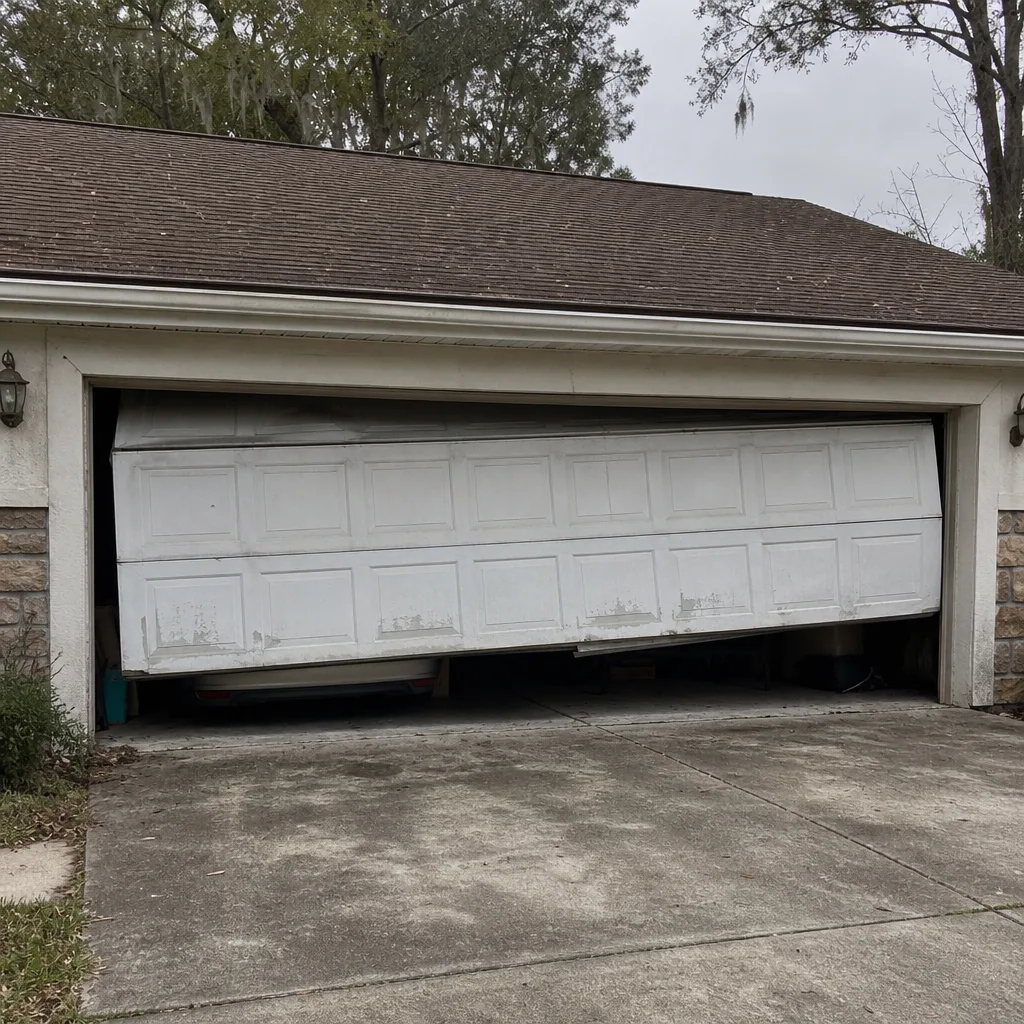 Before
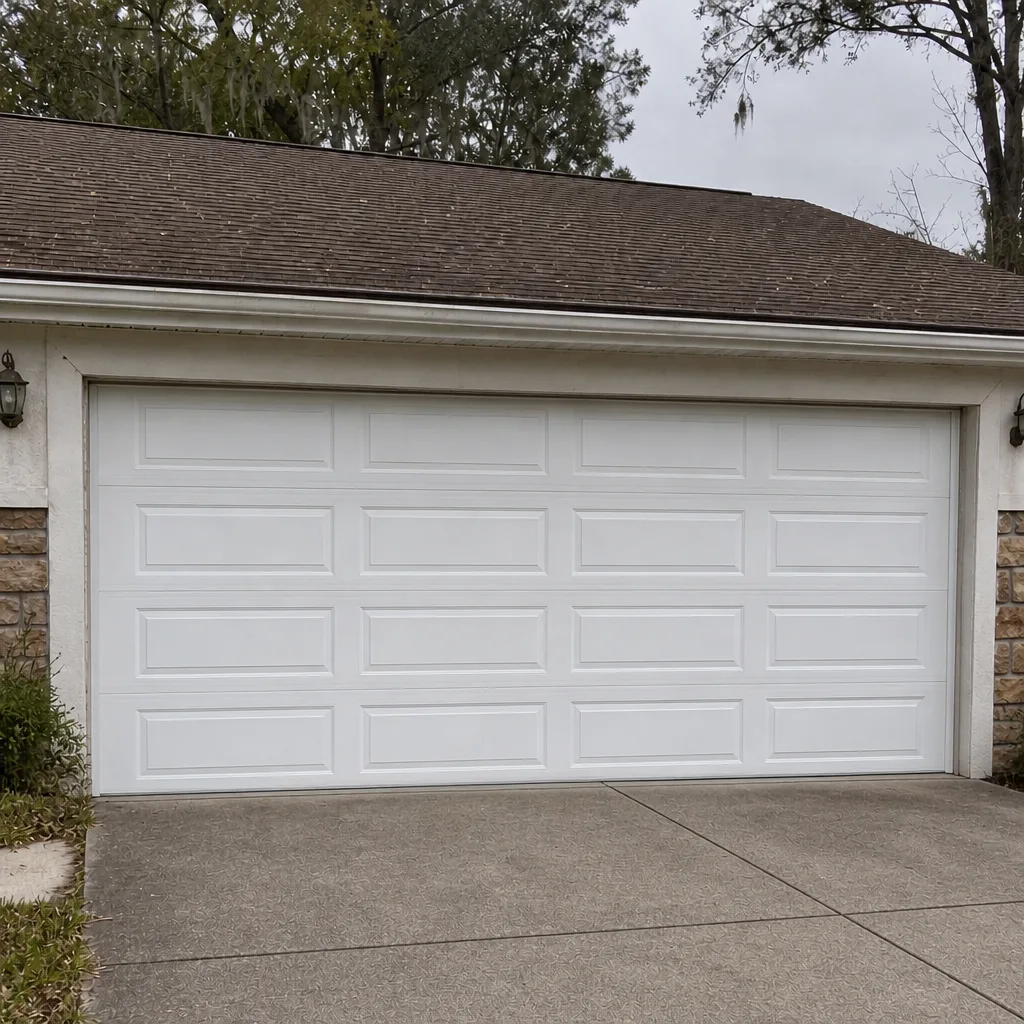 After
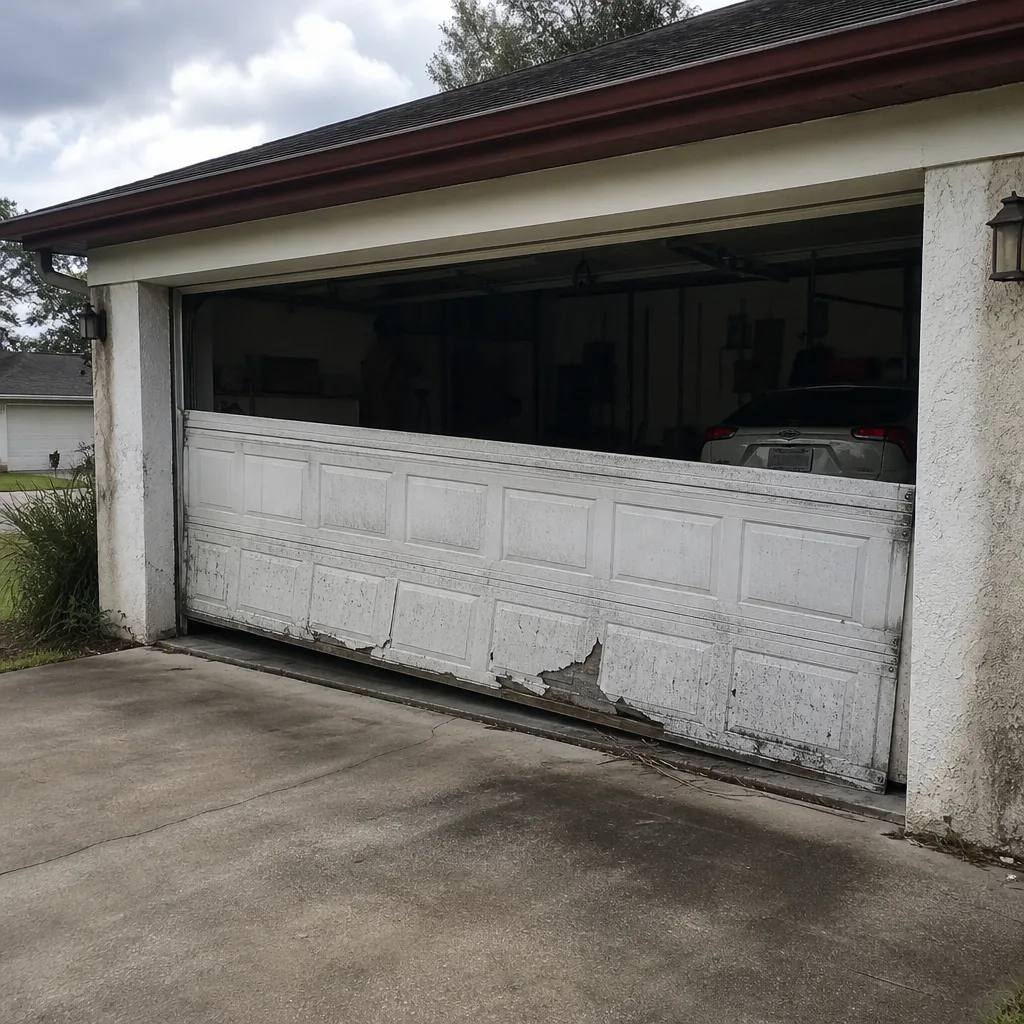 Before
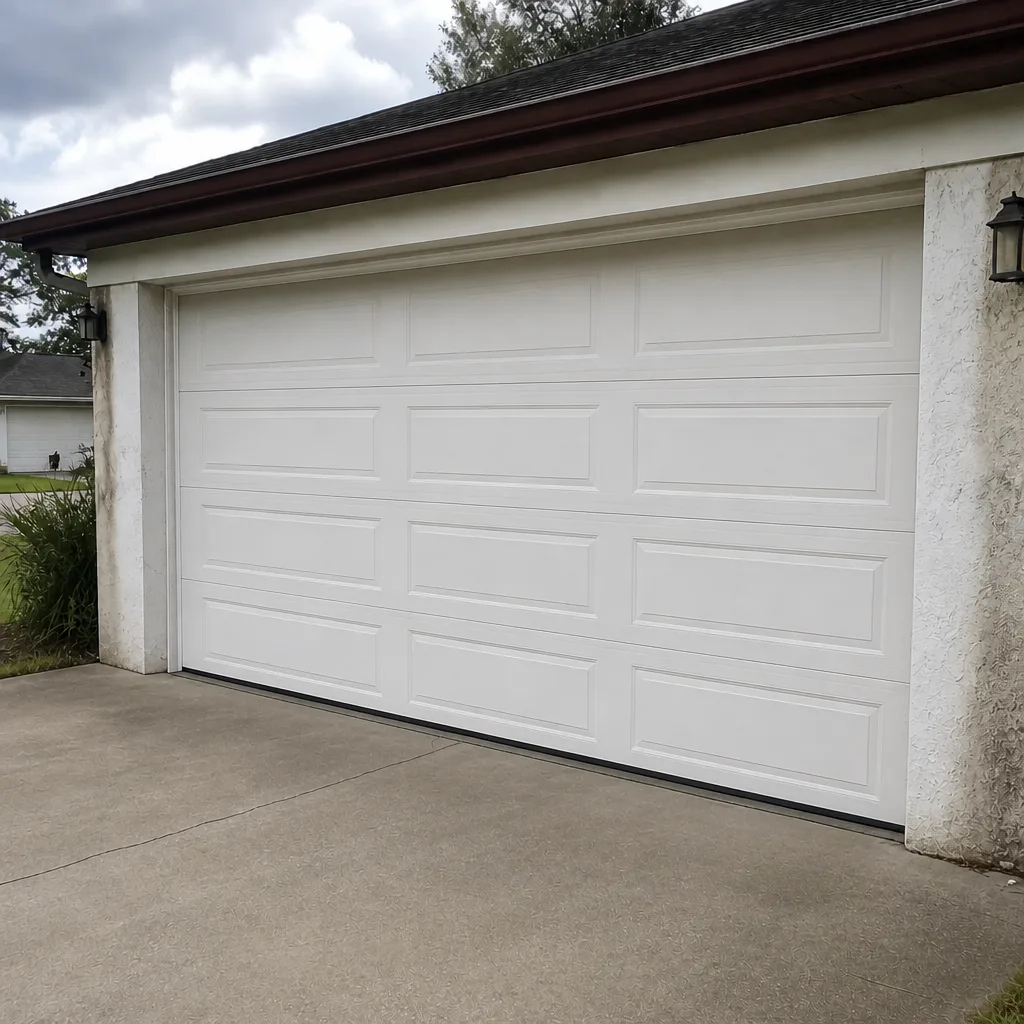 After
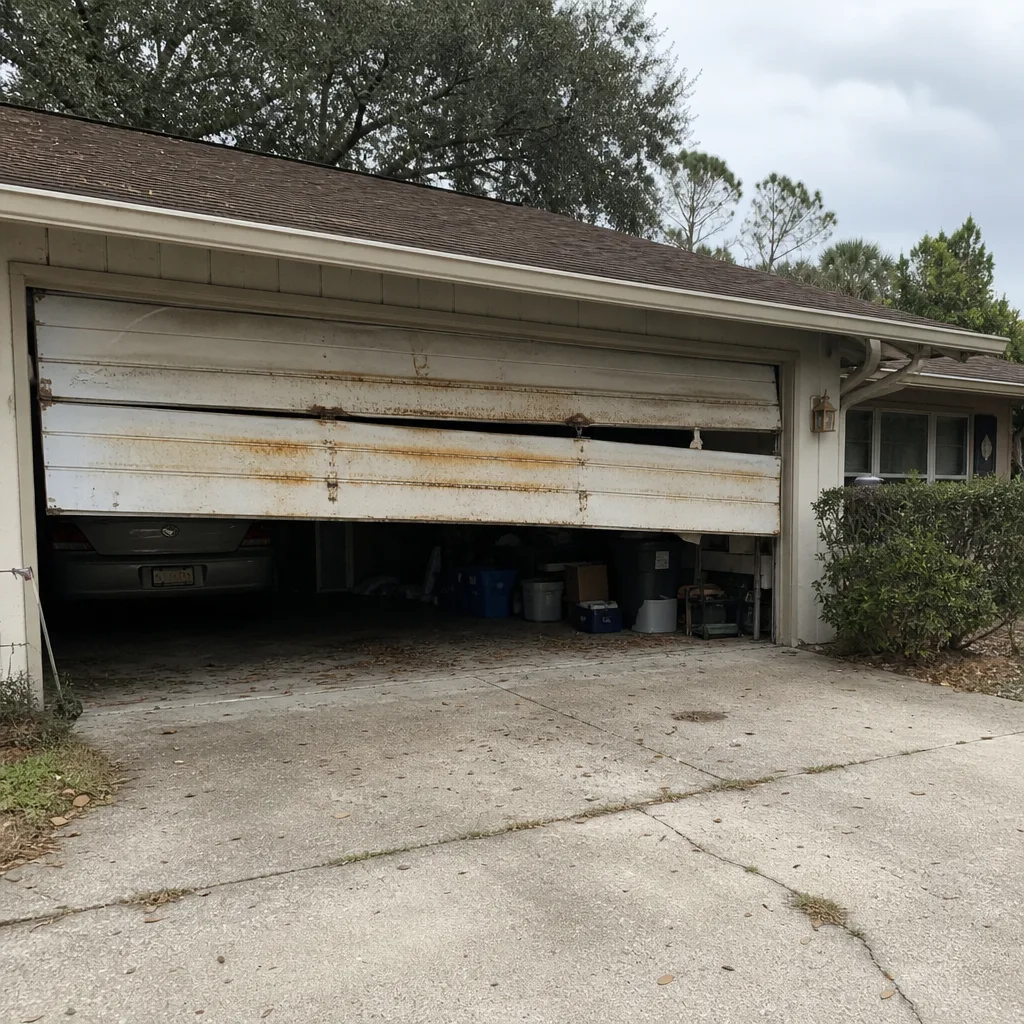 Before
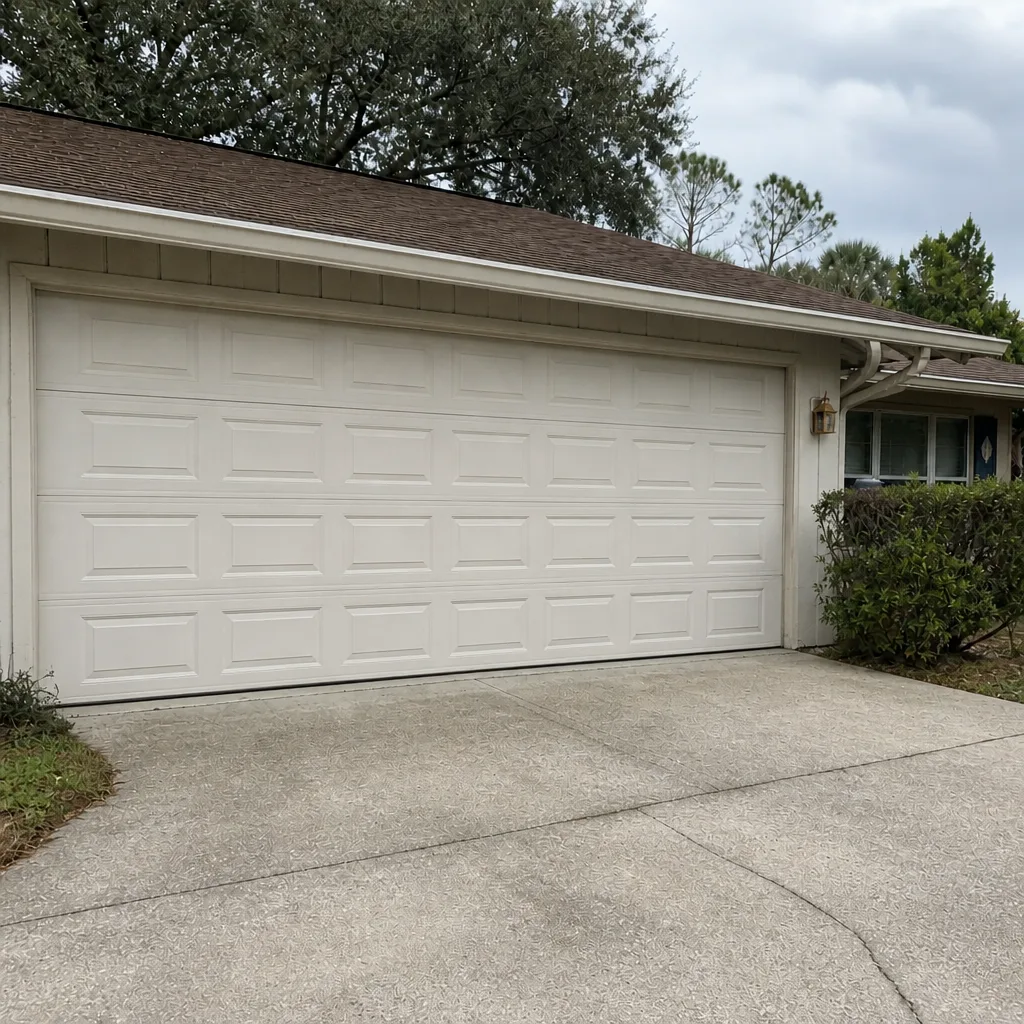 After
When to Call a Professional
Some of this is paperwork. Some of it is genuinely dangerous. High-tension torsion and extension springs are under significant stored force, and adjusting or replacing them without the right tools and technique can cause serious injury. That’s not a job for a homeowner with a ladder and a video. Anything involving the door’s mounting, rated hardware, or the wind-load assembly should also go to a specialist, because the installation details are what the permit inspection is checking. If your door is stuck, off its tracks, or won’t open, that’s an emergency repair situation and we handle those. Ocala Garage Door Repair Pros offers free estimates in Ocala. Call (844) 497-0351, and we’ll tell you what the job needs, including whether a permit applies.
Our technicians have up to 14 years of experience and work across the major brands, including Raynor, LiftMaster, Chamberlain, and Genie systems. One call covers repair, opener work, springs, replacement, and emergencies. If you need a broader look at what we do, start at Ocala Garage Door Repair Pros.
Frequently Asked Questions
Usually yes for a full replacement, because the door’s wind-load rating and attachment are part of the building envelope under the Florida Building Code. A same-size like-for-like swap of an identical rated door occasionally avoids the permit depending on how Marion County classifies the scope. Confirm with the county’s building department before ordering. Call (844) 497-0351 for a free estimate and we’ll walk through the scope with you.
Contact Marion County’s building department with your property address and ask for the design wind speed that applies to your parcel. Ask at the same time whether the property is in a wind-borne debris region. That number is what your new door has to meet or exceed, and it isn’t the same for every address in the county. Call (844) 497-0351 and we’ll help you frame the question before you call.
The inspector verifies that the installed door matches the approved product approval and rating, that the rating meets the design wind speed for the address, that the attachment and reinforcement match the rated configuration, and that the door operates correctly. It’s a check of the rated assembly, not a cosmetic review. Estimates are free if you’re planning a replacement; call (844) 497-0351.
No. Opener repair, spring replacement, roller and hinge work, and track adjustments are maintenance and repair items, not permitted construction. Only work that changes the door’s rated assembly typically triggers a permit. If your opener is failing, call (844) 497-0351 and we’ll diagnose it, including smart openers from LiftMaster and Chamberlain.
It means the door carries product approval or an evaluation showing it resists a specified wind pressure. It’s not a legal term, and a door labeled that way can still fall short of your address’s design wind speed. Check the product approval against your parcel’s number. Call (844) 497-0351 for a free estimate if you’re replacing a door.
If your community has an HOA with architectural review, yes. The two approvals are separate, and running them at the same time with the same door specifications avoids a refile. Get both in writing before the door is ordered. Call (844) 497-0351 and we’ll help you line up the specs both sides need.
The Bottom Line
A garage door permit in Ocala isn’t paperwork for its own sake. It’s the record that proves a rated door was installed correctly, and it’s what protects you during a storm claim or a home sale. Confirm whether your scope needs a permit, pull your address’s design wind speed, match the door’s product approval to that number, run the HOA and county processes together, and keep every document. Spring and opener work are separate and usually don’t need a permit, but they’re still specialist work, and high-tension springs are genuinely dangerous. When you’re ready, call (844) 497-0351 for a free estimate. The written price is agreed before any work starts. We can work with your insurer if a claim is involved, and our technicians have up to 14 years of experience across Raynor, LiftMaster, Chamberlain, and Genie systems.
Written by the team at Ocala Garage Door Repair Pros.