Last updated November 21, 2026
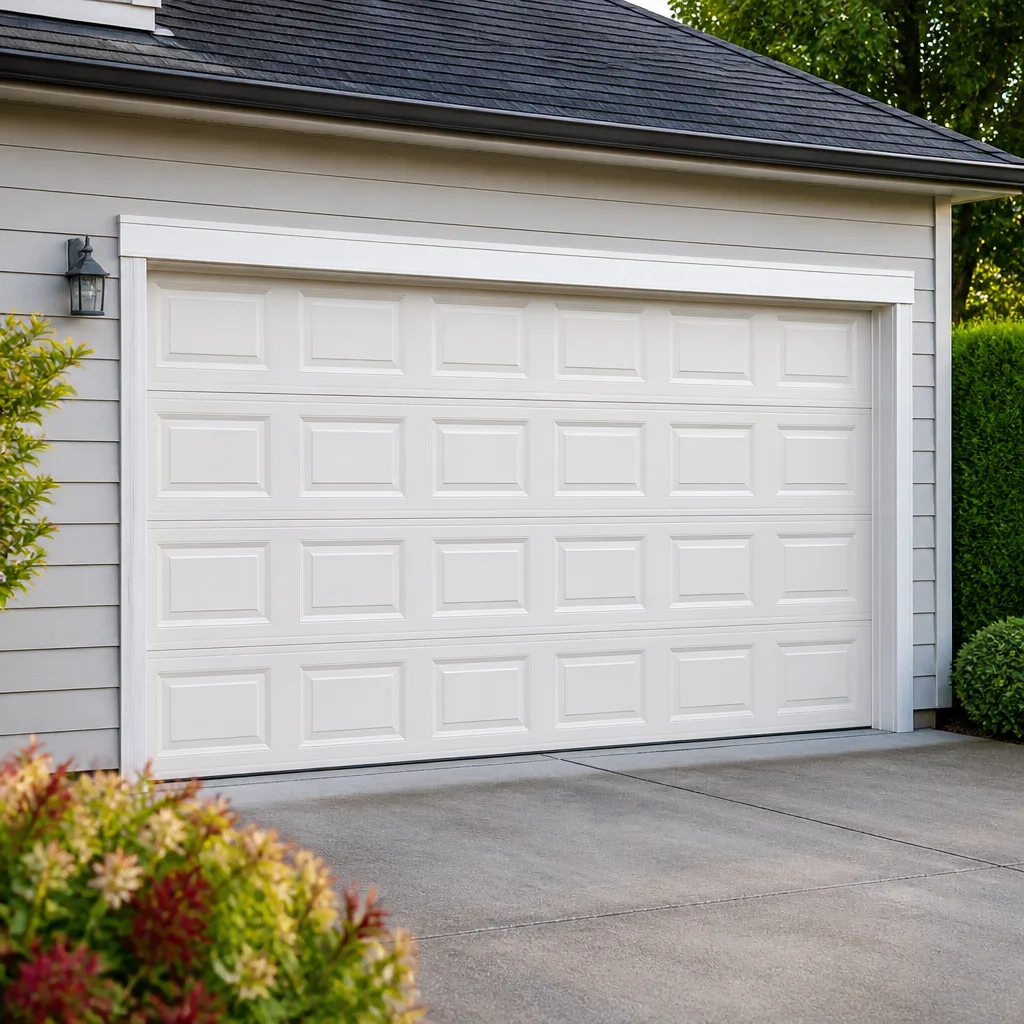 Raised-panel steel
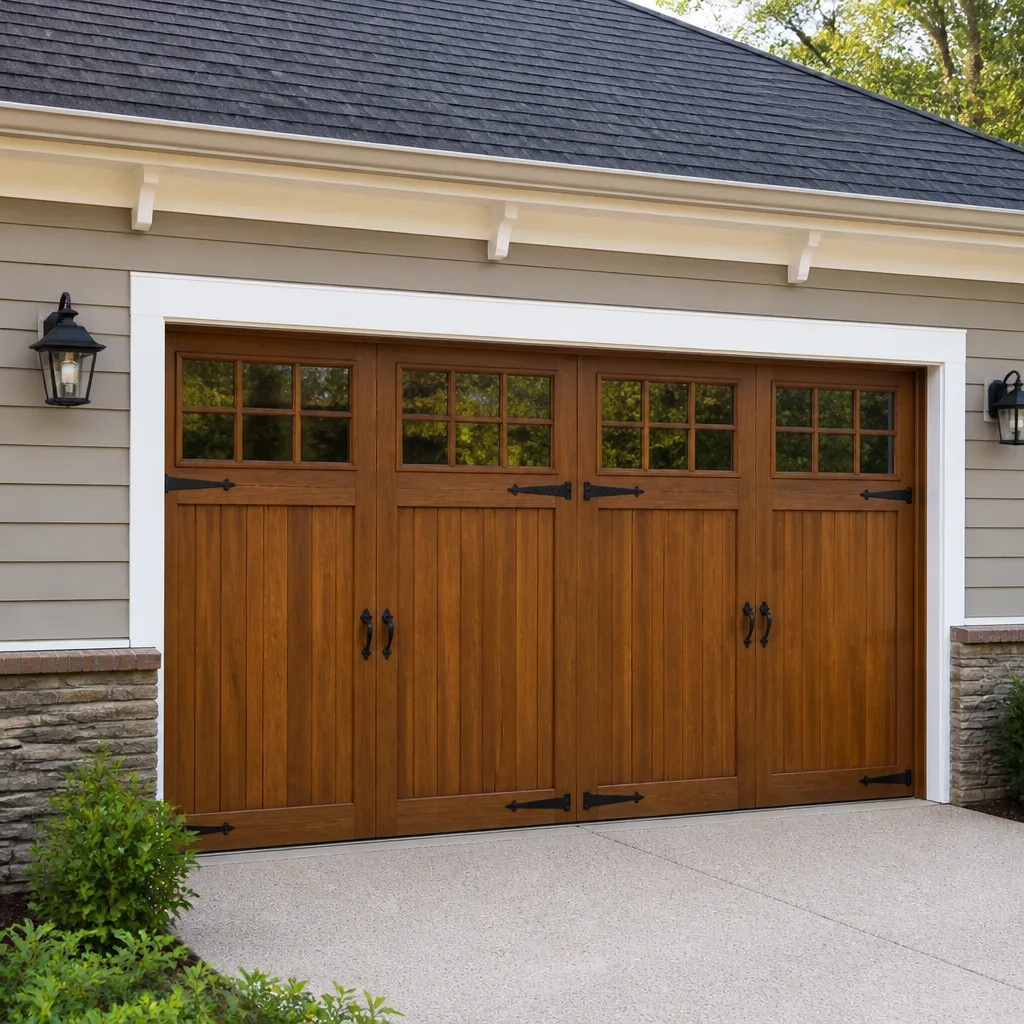 Carriage house
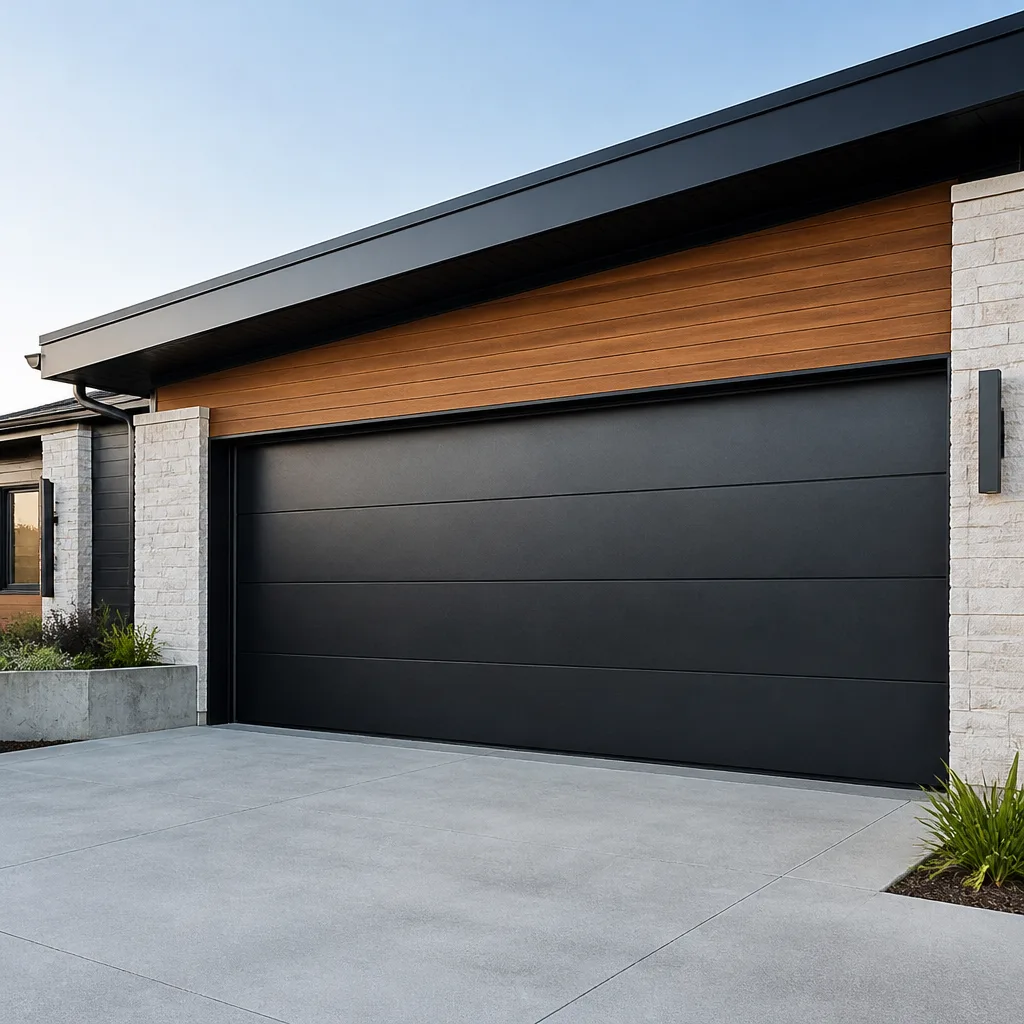 Modern flush
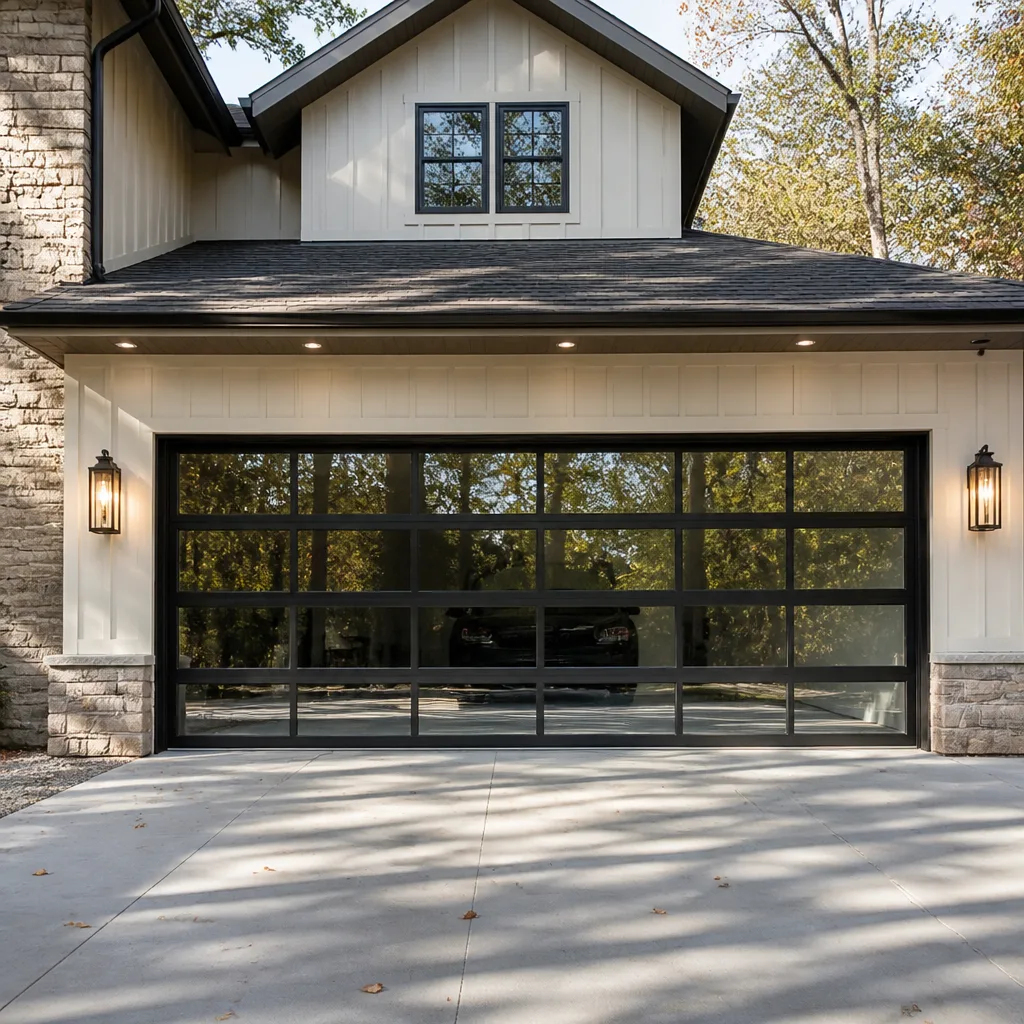 Full-view glass
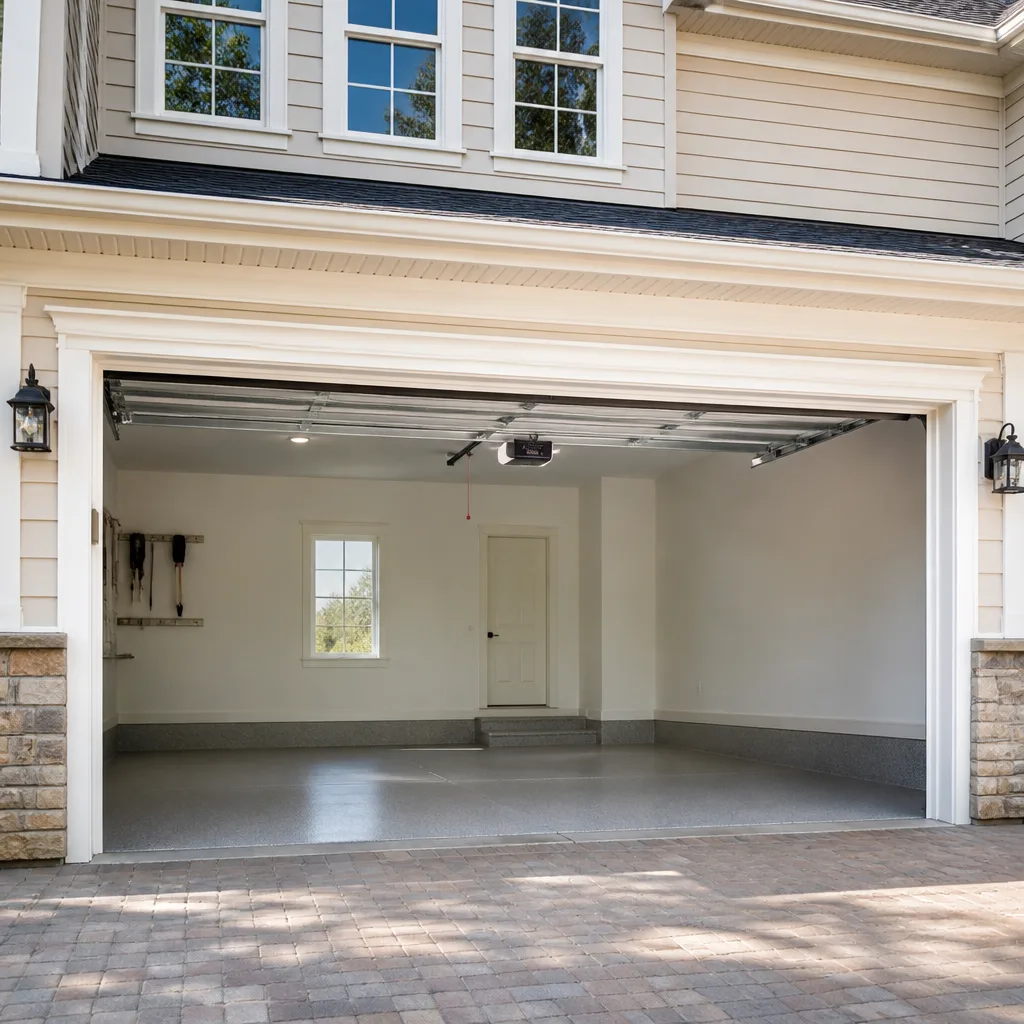 LiftMaster openers
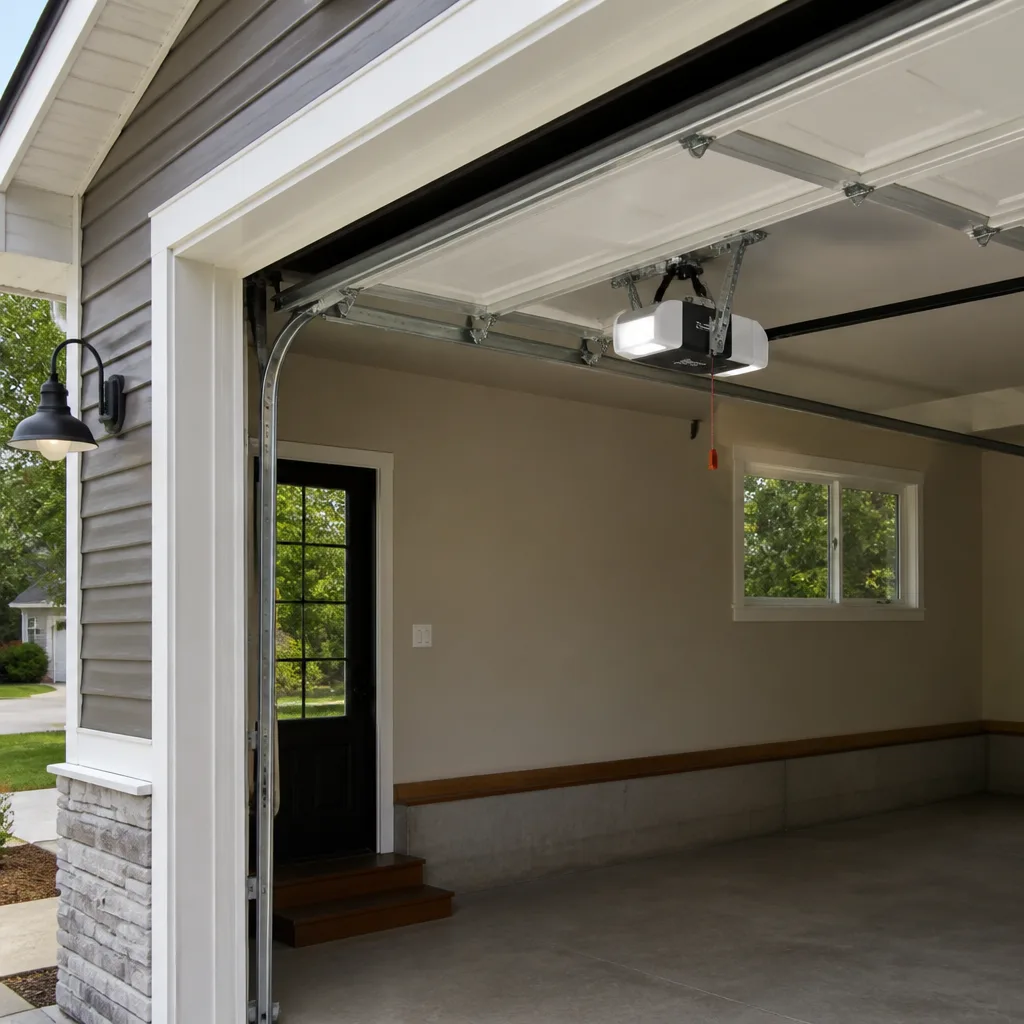 Chamberlain openers
Full 25-point door and opener safety check with every visit - springs, cables, rollers, tracks, and your LiftMaster or Chamberlain opener included
You get a price before we start. It does not change when the pro arrives.
Get your free estimateGarage Door Emergency Preparedness Guide for Ocala Homes
Most Ocala homeowners think about their garage door exactly twice: when it breaks, and when a hurricane is spinning toward the coast. The problem is that those two moments arrive together far more often than people expect. A storm knocks out power, and suddenly the only way into the house is a door that won’t move. Or the power comes back, the door won’t close, and there’s nobody to call until morning. This guide is about the hours before and during that kind of emergency. You’ll learn how the manual release actually works on the openers common in Ocala homes, how to check whether your door will hold in high wind, how to brace a door that won’t close, and what to keep on hand so one broken part doesn’t leave your home open.
Quick Answer
A garage door emergency in Ocala usually comes down to two failures: no power to the opener and no working manual release. Every residential opener has a release that lets you lift the door by hand, but the handle is placed differently by brand, and many homeowners have never pulled it. Before a storm or an outage, practice the release with the door closed, learn where yours is, and check that the door runs freely by hand. If your door is damaged or a spring is broken, that is a safety call, not a DIY job – high-tension springs can cause serious injury.
Styles & brands we work with
- Raised-panel steel
- Carriage house
- Modern flush
- Full-view glass
- LiftMaster openers
- Chamberlain openers
Table of Contents
- Why a Garage Door Emergency Is Different in Ocala
- How to Use the Manual Release on Six Common Ocala Openers
- How to Secure a Garage Door From the Inside When the Opener Fails
- Pre-Storm Inspection: Five Checks That Predict Whether a Door Holds
- Stuck Open With a Storm Coming: Temporary Bracing That Works
- Building a Garage Door Emergency Kit
- What to Do When the Power Goes Out and Won’t Come Back
- Common Mistakes to Avoid
- When to Call a Professional
Why a Garage Door Emergency Is Different in Ocala
In a lot of the country, the garage door is a convenience. In Ocala, it’s often the biggest opening in the building envelope, and it faces the weather. Marion County is no stranger to hurricane season, and a garage door that’s rated properly is part of what keeps a home from losing pressure during high wind. That changes how you should think about an emergency. A door that won’t close isn’t just an annoyance you’ll fix later. During a storm, it’s an open span the wind can push against.
There’s a second Ocala-specific factor: how people actually live here. Many homes have an attached garage, and many families come and go through it more than the front door. When the opener fails, the house becomes harder to enter, and that’s especially true if you’re arriving home in the dark after an outage. We hear from Ocala homeowners who have never once used the manual release on their opener. It’s the single most common knowledge gap we come across.
The third factor is timing. Storms make garage doors fail in clusters. When a squall line rolls through and takes out power across town, the phone lines fill up. That’s why the work in this guide is about preparation. A homeowner who knows their release, has checked the door by hand, and keeps a small kit can ride out a day or two until a technician comes. A homeowner who hasn’t done any of that is stuck calling around while the door sits open.
What “emergency” tends to mean here
- Stuck open before a storm: the door won’t close, or closes and reverses, and wind is coming.
- Stuck closed during an outage: no power, and the manual release is jammed, misplaced or unknown.
- Broken spring after heavy use: a torsion or extension spring snaps, the door becomes very heavy, and the opener strains or quits.
- Door off its track: the door has jumped the rail after a jolt, and lifting it is no longer safe.
- Opener failure mid-cycle: the door stops halfway and won’t complete the open or close.
Notice that most of these are mechanical failures that a storm makes urgent rather than causes. That’s the useful insight. You prepare for the storm by making sure the door and the release work before the weather arrives.
How to Use the Manual Release on Six Common Ocala Openers
The manual release on a residential opener is a cord or lever that disconnects the door from the opener so you can lift it by hand – and on most brands it hangs from the rail near the door, though not always at the same spot or in the same shape. The principle is identical across brands. The differences are in where you reach and what you pull. Learn yours now, with the door down and nothing at stake.
Here’s the general procedure, which applies to every brand:
- Pull down firmly on the release handle or cord. You may feel a small catch release.
- Lift the bottom edge of the door by hand. A balanced door should lift with steady, moderate effort. If it feels extremely heavy or won’t budge, stop – a spring may be broken.
- To re-engage, lower the door fully to the ground and push or pull the release back to its connected position, then test the opener with the door down.
Now the brand differences. Ocala homes carry a mix of openers, and these are the ones you’ll run into most:
- LiftMaster: the release cord typically hangs from the trolley on the rail, with a distinctive red knob or T-handle. Some models mount the handle closer to the door rather than mid-rail. Reaching it is easy; finding it in the dark isn’t, so keep a light nearby.
- Chamberlain: Chamberlain shares its engineering with LiftMaster, so you’ll usually see a red handle on a cord under the rail. On newer units with belt drives, the trolley sits after the opener head, so look slightly further back.
- Genie: the release handle is often a colored lever near the carriage rather than a long hanging cord. Some Genie units use a shorter pull. Reach up and along the rail rather than straight down.
- Craftsman: Craftsman openers vary a lot by model. Older chain-drive units use a hanging cord; newer ones may have a handle mounted near the carriage. Check yours before you need it.
- Wayne Dalton: when paired with a Wayne Dalton opener, the release is on the carriage and follows the same pull-to-disconnect logic. On doors with a Wayne Dalton torsion system, the release is entirely separate from the spring, which stays under tension at all times.
- Raynor: Raynor openers often use a lever-style release near the trolley. Pull it toward you rather than down.
One warning before you touch anything. Never attempt to adjust, unwind or replace a torsion or extension spring to get the door working during an outage. Those springs hold lethal amounts of force even when the door is down and the power is off. That’s a job for a trained technician with the right tools. If the door lifts hard by hand after you’ve released it, that’s your sign the spring is the problem. Call garage door repair rather than forcing it.
How to Secure a Garage Door From the Inside When the Opener Fails
If the opener fails and the door must stay shut during a storm, the safest approach is to get the door fully closed and locked manually, then brace it – never to leave it partway down or rely on the opener’s brake. Here’s the sequence we recommend for Ocala homes that need to hold the door shut through wind.
- Close the door by hand. With the release pulled, lower the door until it seats on the ground. Push the release back to reconnect it only if the door is fully down; some homeowners find it’s more secure to leave the door disconnected so nothing can move it.
- Engage the manual lock. Many residential doors have a slide bolt or locking bar on the inside. Lock both sides if the door has them. Child or pet doors within the panel may not lock, so check those too.
- Brace the door with a horizontal bar. A length of lumber or a telescoping brace placed horizontally against the door’s interior, braced back to the floor or the wall framing, stops the panel from flexing inward. This is the same basic idea used to shore up openings. Make sure the bar spans the width of the opening and rests against solid framing, not drywall.
- Check for gaps at the bottom. Wind drives rain under the door. A rolled towel or weather strip at the threshold reduces water intrusion.
Two cautions. First, bracing is meant to steady the door, not to make it storm-proof. If a door is going to fail, it fails at the panel or the track, and no wooden bar changes that. If the door is visibly damaged or has already been hit, get out and stay out. Second, don’t block your own exit. If the door is jammed shut and you’ve braced it, make sure a side door or window still opens freely so you’re not trapped inside during an emergency.
For doors in Ocala that are older or have been through a storm before, a technician can check the bracing points and tell you whether a door is stable enough to lock down. We do this kind of assessment all the time; the call is free, and it’s better to know before the weather turns.
Pre-Storm Inspection: Five Checks That Predict Whether a Door Holds
“Holds at 110 mph” is often used loosely. What it actually means is that a properly rated door, correctly installed with the right hardware and bracing, has a good chance of staying in its opening during a storm of that strength. Your door can be rated correctly and still fail if the parts around it have gone loose. These five checks, done before hurricane season, tell you what you’re dealing with. You can do the first three yourself in ten minutes.
- Test the door by hand. Release it from the opener and lift it. A balanced door moves with steady effort and stays roughly where you leave it. A door that slams down or needs real muscle to lift is badly out of balance, which loads the opener and the springs and signals a failure waiting to happen. If it’s extremely heavy, don’t force it – a broken spring may already be there.
- Look at the tracks. Run your eyes along both rails from the floor to the curve. They should be straight, parallel and firmly bolted. Look for bends, dents or missing fasteners. A track bowed inward is a door that will jam under load.
- Check the hinges and rollers. Hinges should be tight to the panels and rollers seated in the track without wobble. A loose hinge flexes the panel edge in wind, and that’s often where a door starts to peel.
- Inspect the springs and cables. Look, don’t touch. Frayed cables, visible gaps in a torsion spring, or a stretched extension spring are warning signs. All spring and cable work is safety-critical and should only be done by a trained technician. If anything looks off, stop and call.
- Confirm the door’s wind rating and bracing. Look at the door’s label or the documentation that came with the home. A door that is rated for the wind zone your home is in, and installed with the correct hardware, is your baseline. If you’re not sure what you have, a professional inspection before hurricane season answers the question.
For Ocala homeowners on the edge of a wind zone, or with a door that’s been through several seasons, this inspection is worth doing every year before June. It takes less time than a grocery run, and it tells you exactly where you stand. It’s also the moment to look at the opener itself – an opener that strains or reverses is telling you something. That’s when garage door opener repair beats waiting for a failure.
What the five checks tell you
- Balanced, straight and tight: the door is likely to hold if the weather is within its rating.
- Out of balance but moving: book a service call before the season, don’t wait for a failure.
- Heavy by hand or visibly damaged: stop using the door and call a professional now.
- Frayed cables or spring gaps: a safety call, not a someday call.
Stuck Open With a Storm Coming: Temporary Bracing That Works
If the door is stuck open and no technician can get there before the storm, the goal is to close the opening, not to repair the door. You are buying time and protecting the house. Two approaches work, in this order of preference.
First: close the door manually and lock it. Pull the release, lower the door by hand until it’s fully down, and lock it. If the door won’t go down because it’s off its track or a panel is bent, don’t force it – forcing a jammed door can drop it. Move to the second approach.
Second: close the opening with a barrier. Cut or assemble plywood or heavy board to cover the opening from the inside, and fasten it to the framing around the door with screws or clamps. Anything you can do to present a solid face to the wind helps, as long as the fastening is into the framing and not just the door panel. Make sure the barrier can be removed from the inside so you’re not sealing yourself in.
A few things that don’t work and shouldn’t be tried: wedging a door partway open with a brick, chaining a door panel to a car, or running the opener against a jammed door. Each of them puts force somewhere the door isn’t built to take it and can turn a fixable problem into a full replacement. This is also the point where a call is worth making, even if you expect the answer is “we’ll come as soon as we can.” Ocala Garage Door Repair Pros offers emergency garage door service, and a technician can at least tell you what’s safe to do by phone.
If the storm passes and the door is damaged, don’t test it by running the opener. A door that has taken a hit can fail on the next cycle. Leave it down and call for an inspection. In a lot of cases what looks like wind damage is a hinge pulled loose or a track bent, and repair is far cheaper than replacement. That’s the conversation garage door installation starts with, too – what’s salvageable and what isn’t.
Building a Garage Door Emergency Kit
You don’t need a toolbox to get through most garage door emergencies. You need a handful of small things that let you keep the door closed, keep water out, and see what you’re doing in the dark. The point is to restore basic function without a service call, and to make a service call faster if you need one. Here’s what we suggest for Ocala homes.
- Flashlight and spare batteries. You’ll be looking up at the rail in the dark. A headlamp is even better because it leaves your hands free.
- A short length of 2×4 or a telescoping brace. Wide enough to span the door opening, strong enough to hold the panel steady when braced back to the framing or floor.
- A small hardware kit. A handful of self-tapping screws, a couple of clamps and a screwdriver cover most of the fasteners around a garage door. A loose hinge or a door bracket that’s worked free is fixable with these in minutes.
- Weather strip or a rolled towel. Sits at the bottom of the door to slow water during driving rain.
- Gloves. The tracks and panel edges are sharp, and the release cord is easier to pull with gloves on.
- Your opener’s model number, written down. If you have to call, that saves time. LiftMaster, Chamberlain and Genie all put the model tag on the opener head or the motor housing.
The two or three parts that matter most are the brace, the hardware kit and the light. Between them, you can lock the door down, tighten a loose bracket and see what you’re doing. That’s usually enough to get through a storm. The rest of the kit is about making the next day easier, not the emergency itself.
Store the kit in the garage where you can reach it without moving the car, and check it once a year when you do your pre-storm inspection. A dead flashlight and a missing brace aren’t much help in a storm.
What not to keep in the kit
Don’t rely on a spare spring, a coil of cable or a can of lubricant to fix a broken door. Springs and cables are under tension and are a job for trained hands. Lubricant belongs on your annual maintenance list, not in an emergency kit. And there’s no substitute for the release – practice it on a calm day so you’re not reading the manual in the dark.
What to Do When the Power Goes Out and Won’t Come Back
When the power is out, a garage door opener is dead weight – the door only moves if you release it and lift it by hand. That’s the whole emergency, and it’s why the release matters so much. The rest of this section is about the days after the outage, when the power may be back but the door still isn’t behaving.
On the first day, release the door and lift it by hand as needed, and lock it at night. If you have a battery backup on your opener – many LiftMaster and Chamberlain units do – check whether it engaged automatically. Battery backups can raise and lower the door a limited number of cycles before they need recharging, so use them sparingly. If the door is stuck closed and you can’t release it, that’s an emergency call. If it’s open and you can lower it by hand, that’s the safe outcome.
After the power comes back, don’t assume the door is fine. An outage can leave the opener’s travel limits off, especially after an abrupt stop. Test the door with the opener, watch for it reversing, and check that the safety sensors are aligned. If the door hums but doesn’t move, the opener may need a reset – and that’s often the point where a simple opener repair call saves you from a burnt-out motor. The safety sensors at the bottom of the track are worth checking first. A leaf or a branch across one of them stops the door mid-cycle and looks exactly like a dead opener.
If the door won’t go up or down smoothly after the power returns, stop cycling it. Repeated attempts against a jammed door can strip the opener’s gears or burn out the motor. Turn the opener off at the wall and call. A generalist handyman often won’t have the parts for LiftMaster, Chamberlain, Genie or Craftsman openers; a garage door specialist will. That’s the difference between a same-day fix and a week of waiting for a part.
Restoring a door after an outage: quick sequence
- Check the wall switch and the breaker before anything else.
- Confirm the opener has power, then check the safety sensors at the floor.
- Release the door and test it by hand – if it’s heavy or binds, stop and call.
- Run the door a full cycle with the opener and watch both directions.
- Re-check the travel limits if the door stops short or reverses.
Common Mistakes to Avoid
We see these repeatedly in Ocala homes, and most of them make an emergency worse or turn a repair into a replacement.
- Never practicing the manual release. A release you have to find for the first time in the dark is a release that won’t help. Pull it now, with the door down. Two minutes of practice is worth more than any tool in the kit.
- Forcing a jammed door with the opener. If the door is off its track or bound up, running the opener batters the motor and the gears. The door is already failing; the opener shouldn’t fail with it.
- Touching the spring. This is the one mistake that can end with a serious injury. Torsion and extension springs are under high tension and stay that way even with the power off. They’re a job for a technician with the right tools.
- Leaving the door open “just for now.” During a storm, an open door is an opening the wind can push on – and the house is less secure through the night. Close and lock it, even if you can’t run the opener.
- Skipping the pre-season inspection because the door is working. A door that runs quietly today can be out of balance, with loose hinges or a bent track, and still fail in wind. The inspection is the whole point of this guide.
- Calling a general handyman for a spring or a smart opener. Springs, openers and connected systems like MyQ need specialist parts and knowledge. A handyman often doesn’t have them, and the job turns into a second call.
- Ignoring the weather strip. The bottom seal and the seal around the frame keep water out of the garage. Ocala rains find every gap, and a rotted bottom section is where water damage starts.
When to Call a Professional
Some things are a flashlight-and-brace job. Others are a call. Here’s the line we draw.
Call a professional for: any broken or stretched spring, frayed cables, a door off its track, a door that won’t close or reverses repeatedly, a door that’s damaged after a storm, an opener that hums but won’t move, or a door that’s heavy to lift by hand. These are safety-critical and often need specialist tools and parts. A spring is not a maintenance item you tackle with a wrench.
You can handle on your own: a dead flashlight, a loose bracket, a misplaced remote, a sensor blocked by a branch, or a battery backup that needs recharging. These restore basic function without a service call.
If you’re in the middle of a storm and the door is open or stuck shut, call anyway. Ocala Garage Door Repair Pros offers emergency garage door service and free estimates in Ocala. Call (844) 497-0351. Our technicians have up to 14 years of experience, and they work on the brand already in your home, from LiftMaster, Chamberlain and Genie openers to Clopay and Amarr doors. One call covers it – a single specialist for repair, springs, openers and emergency work. You’ll get a price quoted and agreed before any work starts, so there’s no surprise when the job is done.
See the difference
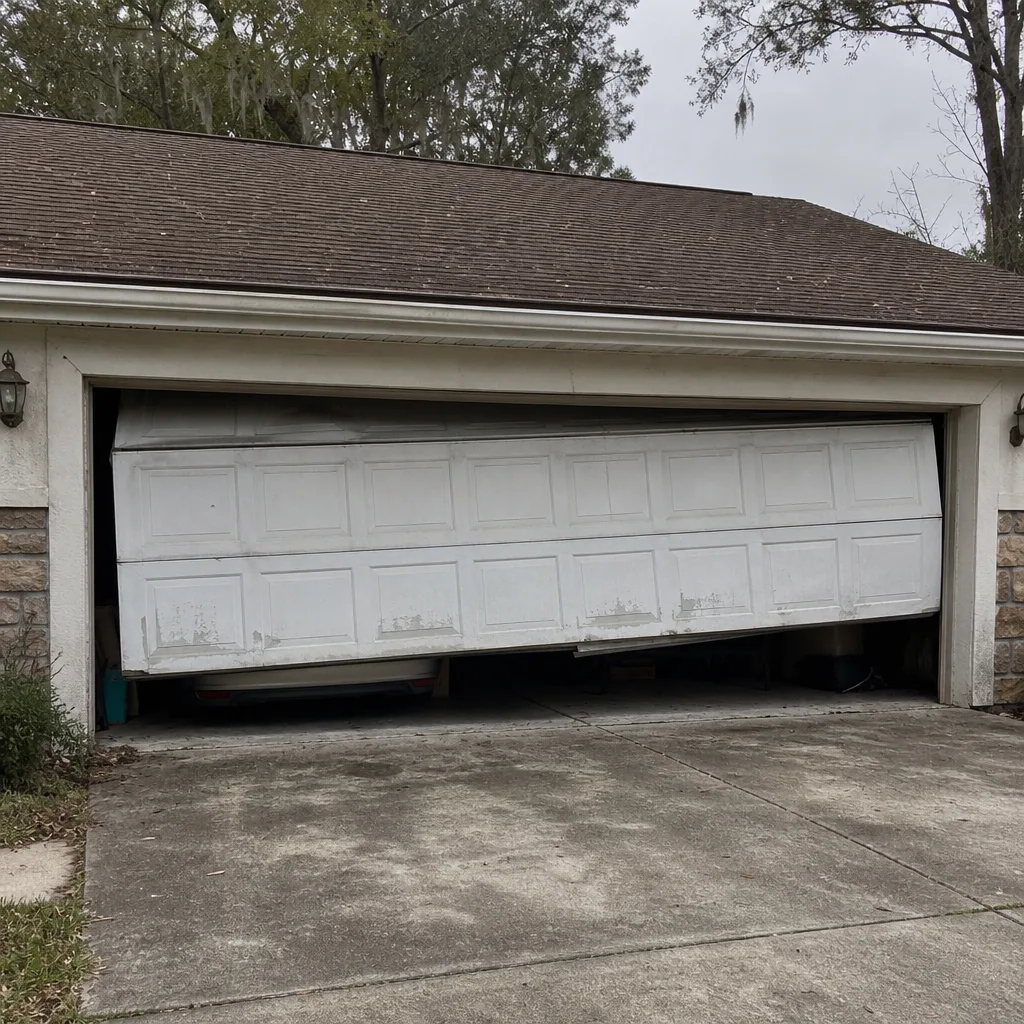 Before
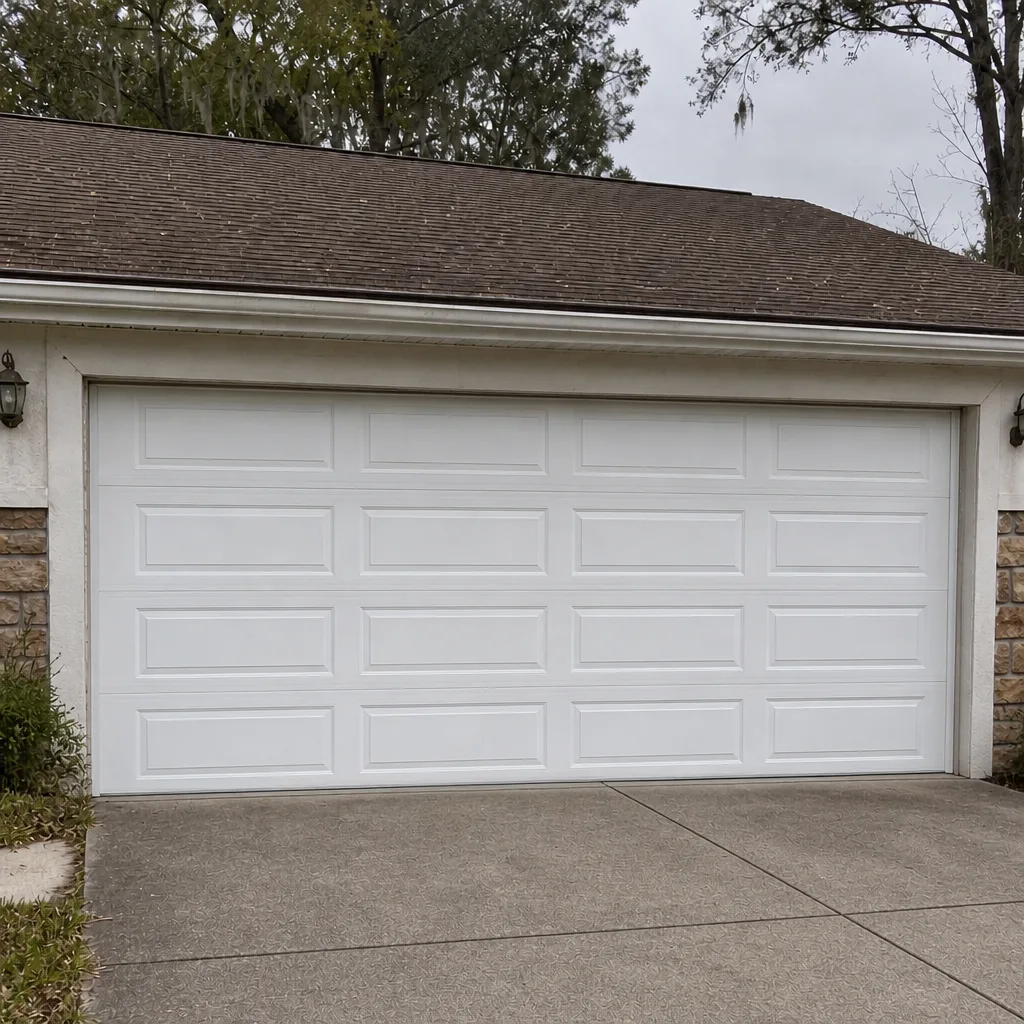 After
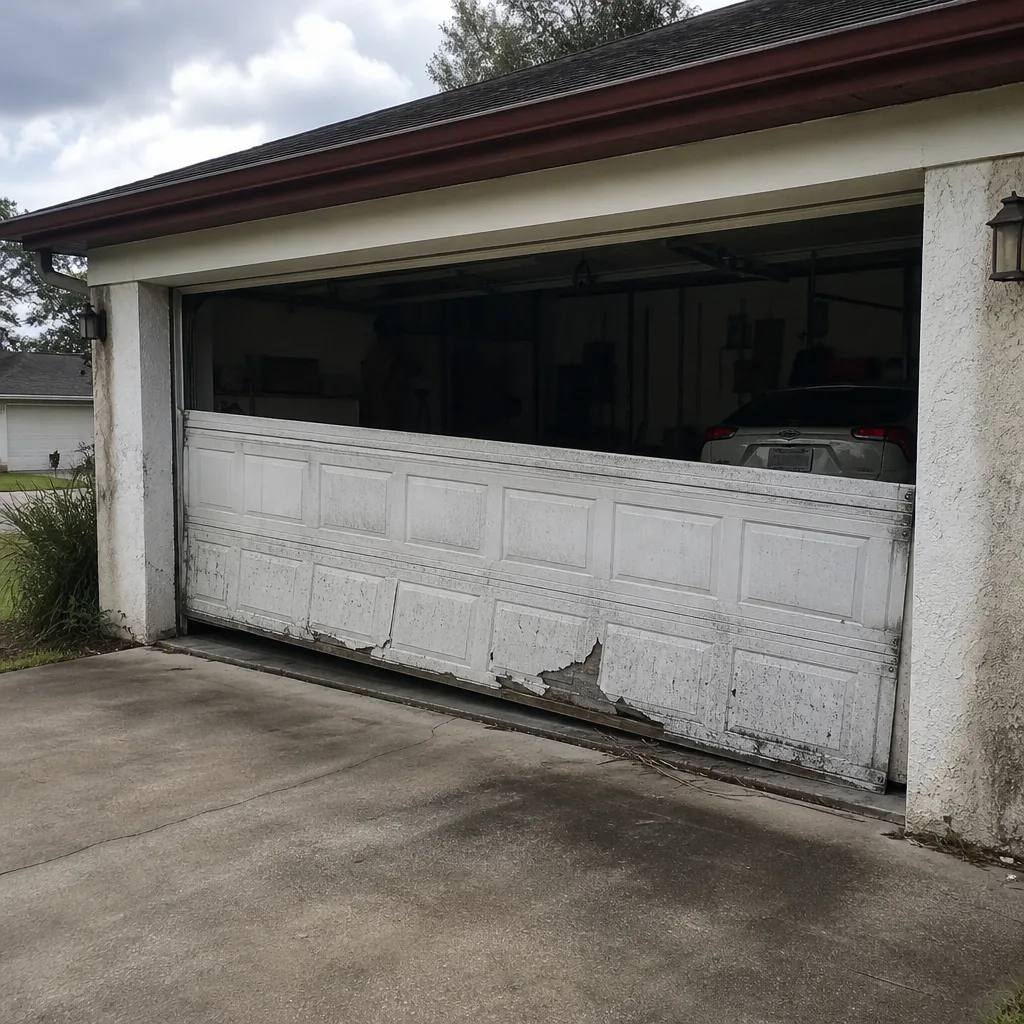 Before
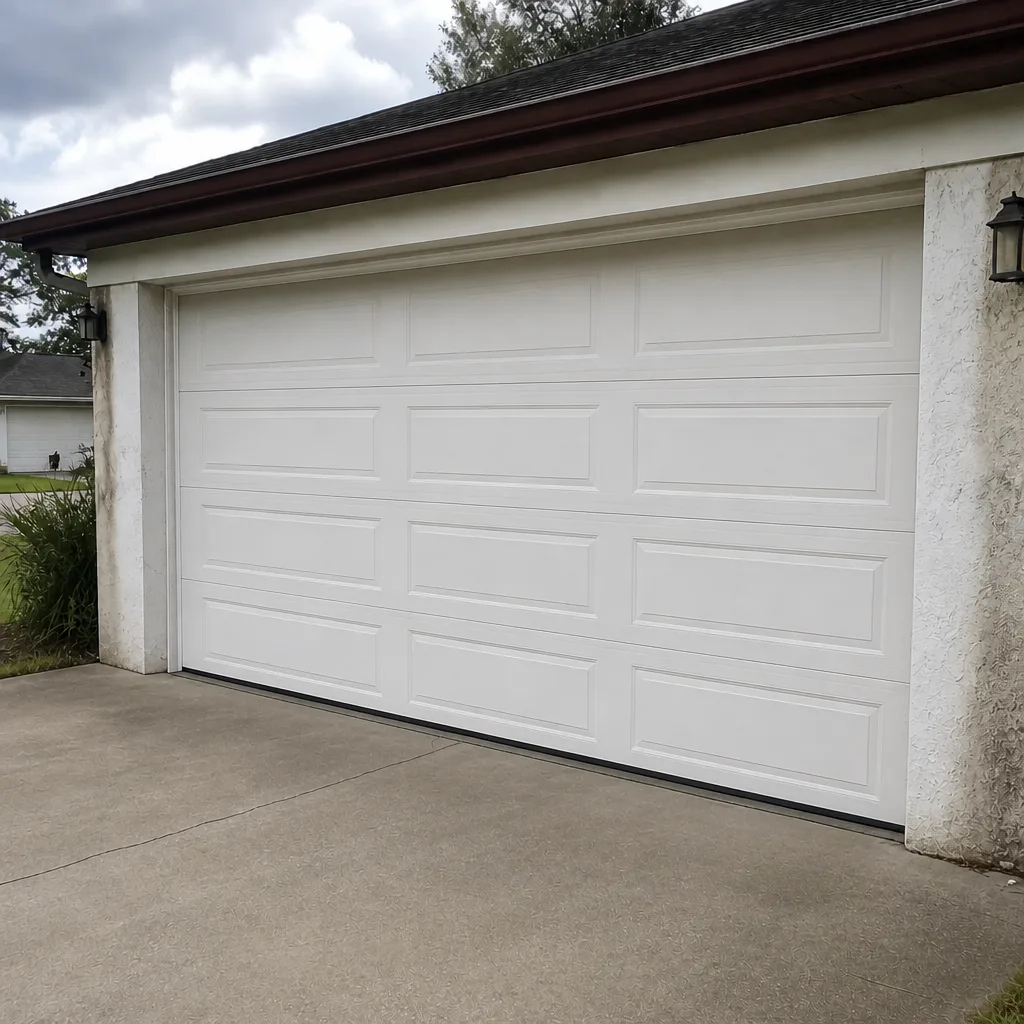 After
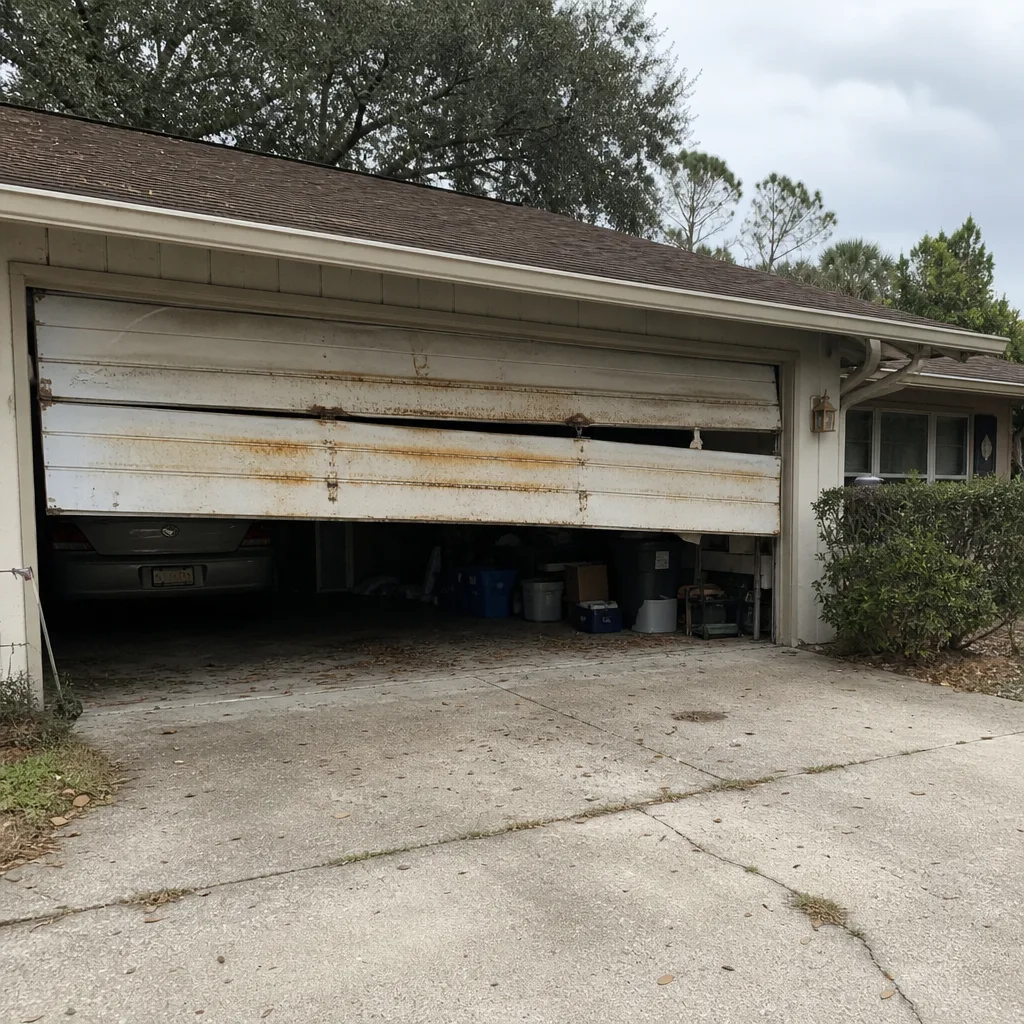 Before
 After
Frequently Asked Questions
Pull the manual release cord or lever, then lift the door by hand. The release disconnects the door from the opener, and a balanced door should lift with steady effort. If it feels heavy or won’t move, stop and call – a spring may be broken. For immediate help, call (844) 497-0351; estimates are free.
On most openers it hangs from the trolley on the rail, but the placement varies by brand. LiftMaster and Chamberlain units usually have a red handle on a cord under the rail; Genie often uses a lever near the carriage; Craftsman and Raynor vary by model. Find yours with the door down and nothing at stake, so you know it before you need it.
No. Torsion and extension springs hold dangerous amounts of force even when the door is down and the power is off, and they should only be handled by a trained technician with professional tools. Forcing or adjusting a spring can cause serious injury. Spring repair is a safety job – call (844) 497-0351 for one.
It depends on whether the door is correctly rated for your wind zone and installed with the right bracing and hardware. A properly rated door in good repair has a good chance of holding in high wind; a door that’s out of balance, with loose hinges or a bent track, is far more likely to fail. A pre-season inspection answers the question for your specific door.
It varies with the problem, the parts needed and the weather. Ordinary repairs – a loose hinge, a stuck door, a sensor issue – are often handled the same day. Spring and opener work depends on the brand and whether the tech has the part. Call (844) 497-0351 with your opener’s model number and we’ll tell you what to expect.
A flashlight and batteries, a brace that spans the door opening, a small hardware kit with screws and a screwdriver, weather strip for water, gloves, and your opener’s model number written down. Those cover locking a door down and making it through a storm. Springs and cables aren’t kit items – they’re a call to a professional.
The Bottom Line
A garage door emergency in Ocala comes down to three skills: knowing your manual release, checking the door before the season, and knowing what’s safe to do by yourself. Practice the release on a calm day. Run the five pre-season checks, and if anything is heavy, bent or frayed, call. Keep a small kit so you can lock the door down and keep water out. And when the problem is a spring, a track, or an opener that won’t run, hand it to a specialist. Ocala Garage Door Repair Pros works on the brand already in your home and covers repair, springs, openers and emergencies. Call (844) 497-0351 for a free estimate.
Written by the team at Ocala Garage Door Repair Pros.