Last updated November 21, 2026
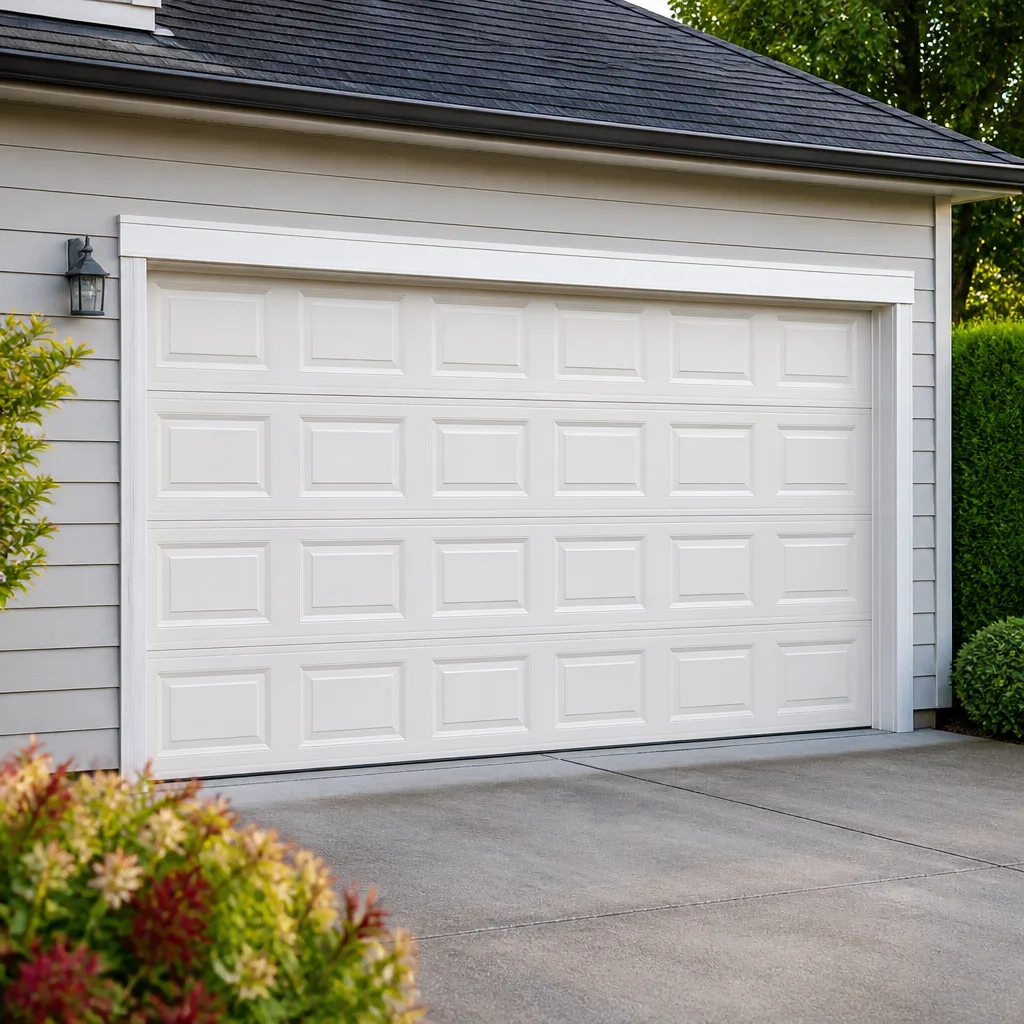 Raised-panel steel
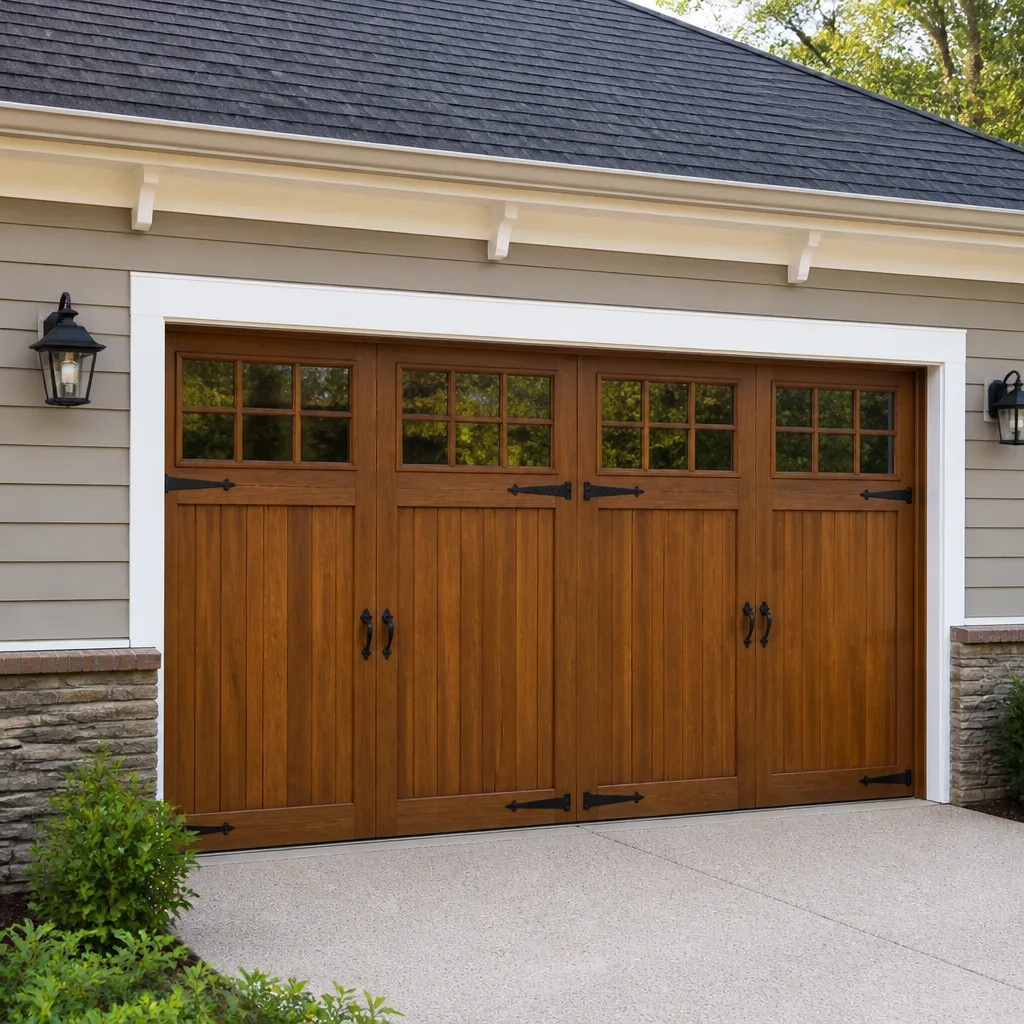 Carriage house
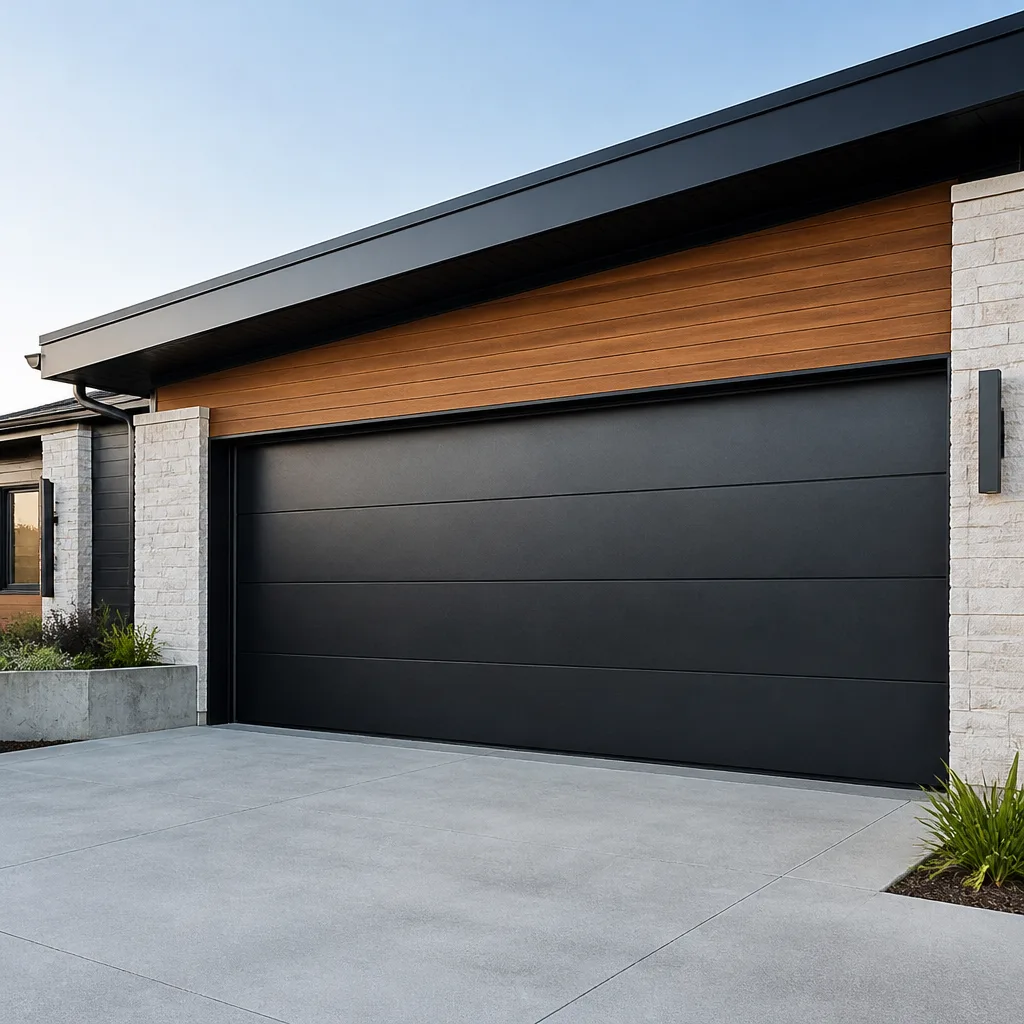 Modern flush
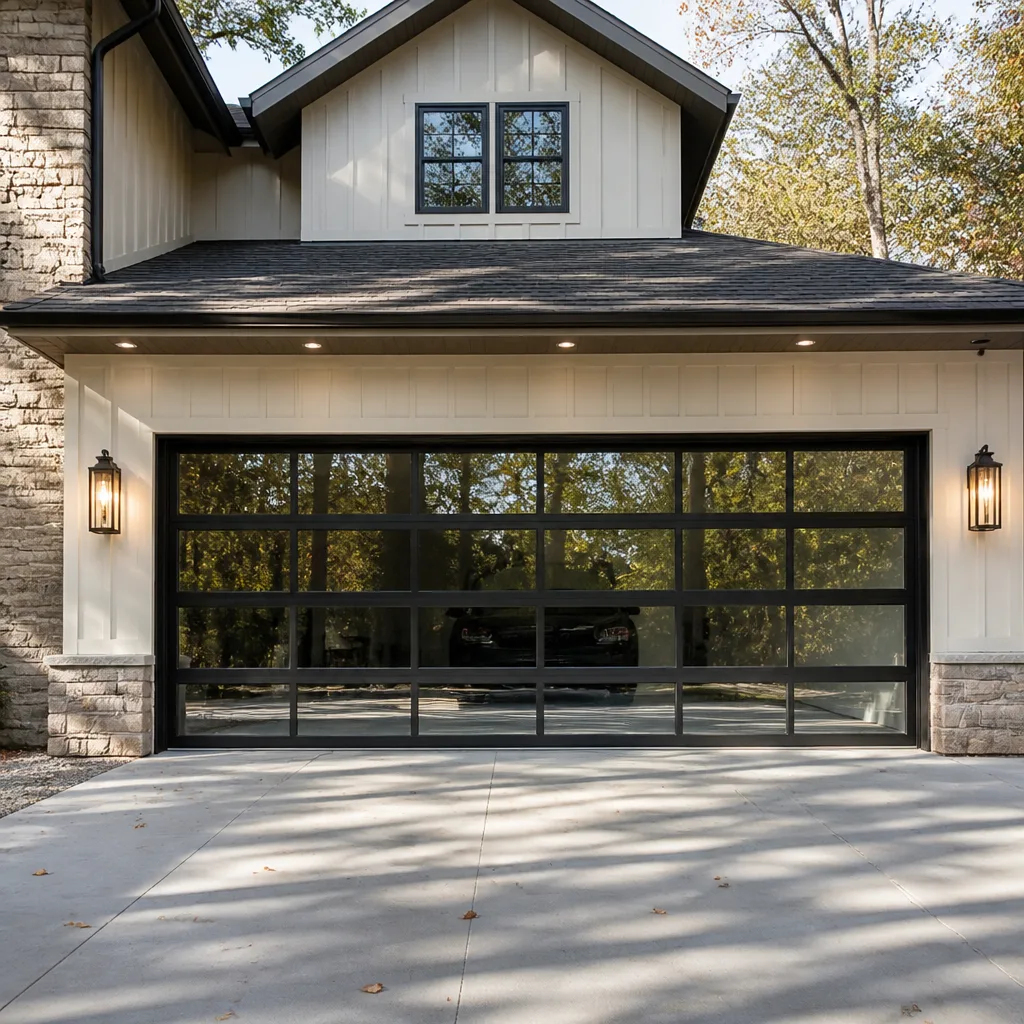 Full-view glass
 LiftMaster openers
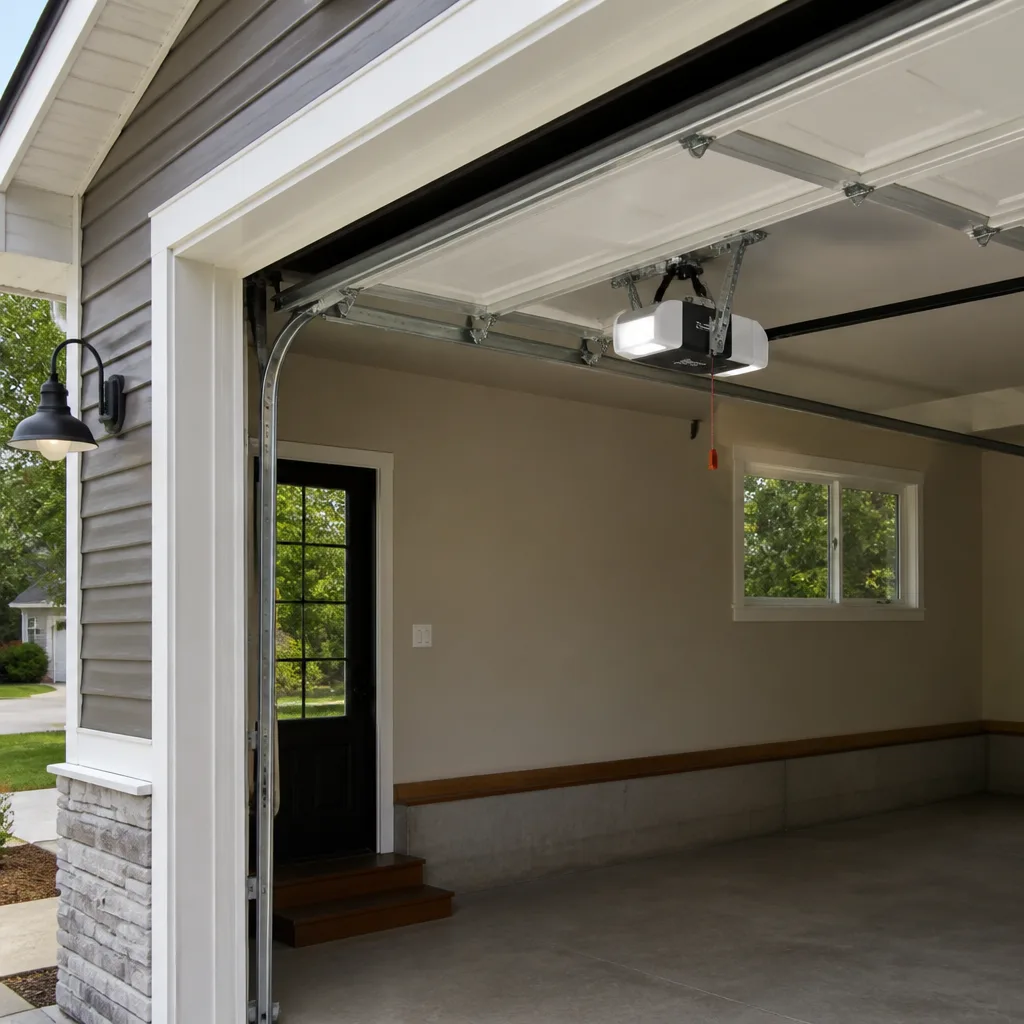 Chamberlain openers
Full 25-point door and opener safety check with every visit - springs, cables, rollers, tracks, and your LiftMaster or Chamberlain opener included
You get a price before we start. It does not change when the pro arrives.
Get your free estimateGarage Door Warning Signs: An Ocala Homeowner’s Reference Guide
A torsion spring doesn’t just break. It usually shows three distinct warning signs in the weeks before failure, each one louder and more visible than the last, and most homeowners who call for an emergency replacement have already lived with at least two of them. That’s the part people miss: the door was telling them something. An uneven lift that started two weeks ago. A bang from the ceiling. A panel that suddenly looks a little further off the floor than it used to. This guide translates those signals into plain diagnostic language so you can schedule a repair instead of paying for an emergency. We spend our days on garage doors in Ocala, and we wrote this to be the reference we’d hand a neighbor.
Quick Answer
Garage door warning signs fall into four groups: sound (bangs, grinding, rattling), movement (uneven lifting, hesitation, sagging), appearance (rust, bent panels, swollen seals), and behavior (blocked safety sensors, opener error codes). A door that lifts unevenly, drifts down on its own, or bangs during operation needs a professional evaluation before it’s used again. A door with minor cosmetic noise or a slow-turning roller can usually stay in service for a few days while you book a repair visit.
Styles & brands we work with
- Raised-panel steel
- Carriage house
- Modern flush
- Full-view glass
- LiftMaster openers
- Chamberlain openers
Table of Contents
- What the Door’s Movement Is Telling You
- Decoding the Noises: Bangs, Grinding, and Rattles
- Florida Warning Signs: What Humidity Does to a Garage Door
- Opener Warning Lights and Error Codes by Brand
- Safe for a Few More Days vs. Stop Using It Now
- The 60-Second Weekly Check Routine
- When a Warning Sign Means Call a Professional
What the Door’s Movement Is Telling You
A garage door that lifts unevenly, lurches at the top, sags on one side, or drifts back down after it closes is telling you something specific. Uneven lifting almost always points to a failing torsion spring on one side, a stretched or slipped cable, or worn drum bearings. Sagging on one corner suggests the spring has lost tension or the cable has jumped its drum. Drift, where the door creeps down a few inches after it settles, points to a spring that can no longer hold its counterbalance or an opener that is losing power at the end of its travel.
The underlying issue in almost every one of these cases is the counterbalance. A garage door is heavy, and the springs exist to lift the weight so the opener only has to push and pull. When the counterbalance is off, the opener fights the full weight of the door, and that’s when the motor wears out or the door folds under stress. A door that jerks on the way up and slams on the way down is running without counterbalance, and that’s a stop-using-it signal.
There’s a mechanical test you can do without tools and without touching a spring. Stand inside the garage and watch the top panel edge as the door rises. If the gap on one side is visibly different from the other, the door is running out of balance. Do the same at halfway open; pause the door and look at the gap on each side. An eighth of an inch of difference is normal. A quarter-inch or more means it’s time for a professional evaluation.
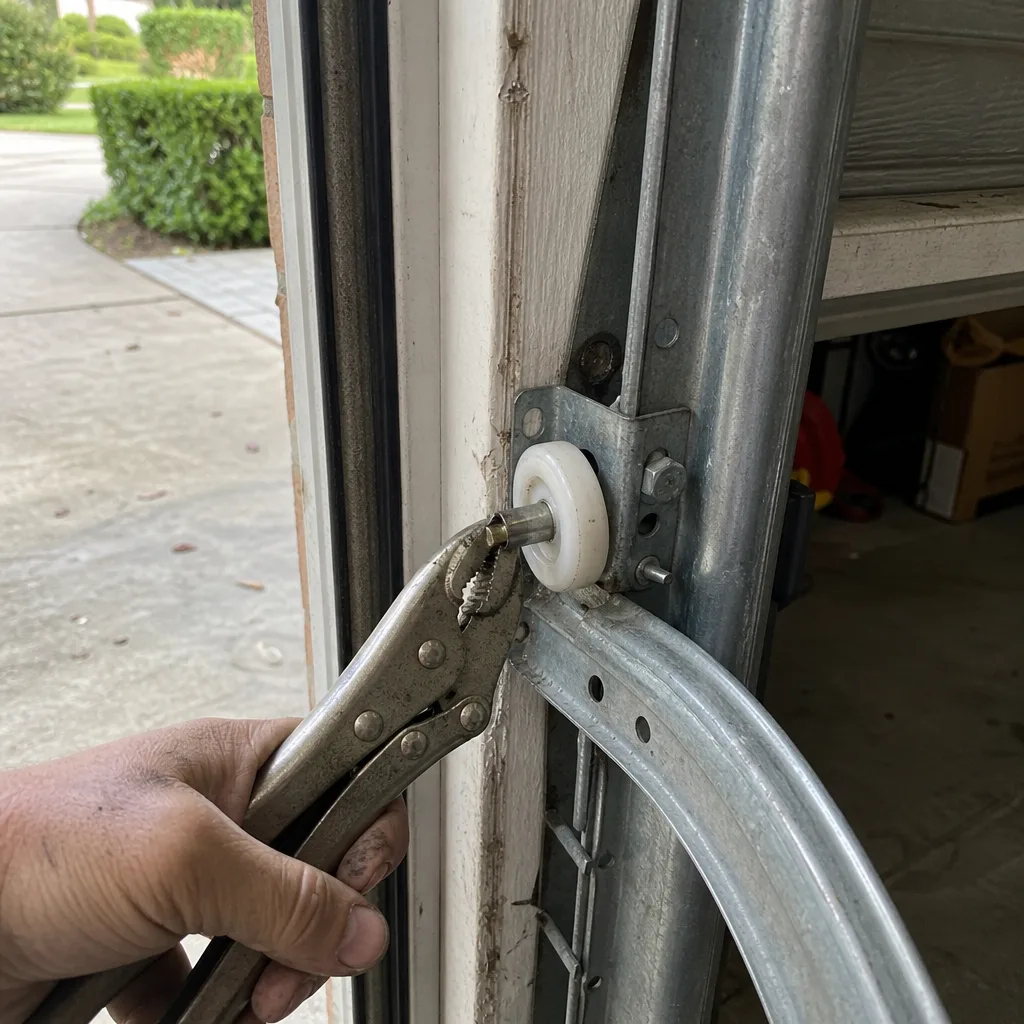
Door tracks matter too. A track that has shifted out of vertical, or a roller that has popped out of the track, means the door is running on a binding path. That’s a warning sign that repairs fast in most Ocala homes, because when the door runs cocked, the panels take the load and start to fatigue. In our experience, a door that’s been binding for a few months shows panel damage along the hinge line, and that’s the point where a repair becomes a replacement. Catching the track issue early keeps it a repair. For the repair side of that work, see our garage door repair page.
Decoding the Noises: Bangs, Grinding, and Rattles
The sounds coming from your door are diagnostic. A single, sharp bang in the middle of operation, followed by the door not lifting, is the sound of a torsion spring breaking. A grinding noise as the door moves usually means a dry or seized bearing, a roller that has worn flat on one side, or rust on the torsion shaft. A rattling or scraping sound from the ceiling points to a loose opener bracket or a chain that has gone slack. A lower, cyclical squeak is usually just the rollers asking for lubrication, which is the least urgent item on this list.
If you hear that sharp bang, stop. Don’t run the opener again to see if it works. A broken spring means the full weight of the door is on the opener or on you, and running the opener risks burning out its gear or stripping the drive. That’s the moment when a homeowner needs emergency garage door service, and it’s why we treat this call as urgent rather than something we book into a later slot. Working on high-tension springs is not a homeowner job: torsion springs carry the equivalent of significant stored force, and mishandling one can cause serious injury. We bring the right tools and technique because we handle these every week.
Grinding gets its own paragraph because it’s the most misunderstood sound. A lot of people hear grinding and assume the opener is dying. Sometimes they’re right. More often, the opener is fine and one of the rollers has worn to a flat spot, or a hinge has lost its pin, or the torsion shaft is running dry inside its end bearing. A good diagnostic tech will run the door and isolate where the sound is coming from before touching the opener at all. That’s part of why we work on openers as a specialty instead of as an add-on for garage door opener repair in Ocala; the sound is not always coming from where you’d guess.
A faint squeak that shows up only in the morning, after a cool night, is almost always the rollers. Lubrication with a proper garage door lubricant helps for a few weeks and then the squeak comes back if the roller is genuinely worn. Worn rollers are cheap, and swapping them is a normal part of an annual tune-up, which is one of the reasons we suggest a professional look every year or two instead of waiting for a failure.
Florida Warning Signs: What Humidity Does to a Garage Door
Ocala’s humidity is a slow-acting contributor to garage door failure. The typical symptoms show up on the springs, the bottom seal, and the safety sensors, and they don’t look dramatic until they become expensive. A rust bloom on a torsion spring isn’t cosmetic. Rust pits the wire surface, and every pit is a stress riser. A spring that looks a little brown after a few summers here is more likely to snap than a clean one, and the failure happens without warning once the pitting has run deep enough. If you can see visible rust on the coils, that spring is on borrowed time.
The bottom seal is the other humidity casualty. The rubber or vinyl seal along the floor absorbs moisture at its edge and swells. Once it’s swollen, it drags on the floor, which adds load to the opener and starts to distort the bottom panel. You’ll see the bottom panel lifting a little at the center, or the seal feathering out to one side when the door is closed. On top of that, a swollen seal lets water and pests in, which is why we swap bottom seals as a normal part of tune-up work.
The third humidity signal is in the safety sensors. Heat expansion and humidity-driven oxidation at the sensor’s receiver window can cause the safety eye to drift out of alignment with the opposite sensor, and the door starts reversing or refusing to close on its own. When that happens, the opener’s light usually flashes to tell you which sensor is at fault. If you clean the lens and check that the LEDs on both sensors are steady, and the door still reverses, you probably have a sensor alignment or wiring issue that a tech needs to address. Our team points out that this is one of the most common service calls we field in Ocala during the wet season, and it’s almost always a small fix.
One last item on the Florida side: screen enclosures and lanais near the garage door track may dump water onto the track when it rains hard, which rusts the rollers and track in the open-air part of the garage. Checking your track for rust after a heavy rain is a 30-second habit that saves a lot of grief. A little rust on a roller is a swap. Rust on a track means the door alignment needs a look.
Opener Warning Lights and Error Codes by Brand
Your opener console is a diagnostic tool you probably ignore. Almost every modern opener from LiftMaster, Chamberlain, or Genie flashes a code or a light pattern when something is off, and knowing what each pattern means lets you decide whether to call a tech, clean a sensor, or re-pair a remote. The codes below are the ones homeowners ask about most often.
On a LiftMaster or Chamberlain with a MyQ or Security+ 2.0 control panel, a single flash on the up and down arrows usually means a sensor problem. The control panel displays a number of flashes, and the count corresponds to a specific cause: an obstruction, a misaligned safety eye, a short in the wall control wiring, or a logic board fault. A steadily lit LED with no flash usually means the door is working fine and the opener is waiting for a command. If your opener is paired with MyQ, a series of beeps with no movement often means the door was interrupted through the app or the wall control and needs to be re-commanded.
On a Genie unit with a wall console, a rapid flash on the LED typically signals an obstruction in the safety beam path, and a slower or steady blink can point to the opener’s travel limits being out of adjustment. Genie codes are usually interpreted alongside the light behavior of the safety sensors themselves; if the sending sensor’s LED is on and steady and the receiving sensor’s LED is off, the receiver side is the problem. That’s often just a lens clean or a small wire repair.
The brand question matters here, and it’s why we work on the brand already in your home. Technicians trained on LiftMaster and Chamberlain know the Security+ and MyQ systems inside and out because those two are the most common in Ocala homes. When a Genie unit is acting up, the diagnostic path is different, but the underlying logic of travel limits, safety beam, and force sensors is the same. We bring the right tester and the right spare parts for the brand on your ceiling. If the opener is old enough that parts are getting hard to find, our team will say so honestly and talk you through options, which is where a new opener or door comes into play. That work is scheduled, not same-day; see our garage door installation page for how that process runs.
Safe for a Few More Days vs. Stop Using It Now
The hardest judgment call in garage door diagnostics is knowing whether a warning sign means “schedule a repair this week” or “do not touch the door until a tech is out.” Below is how we triage the signs homeowners describe to us on the phone.
Stop using the door immediately if you notice:
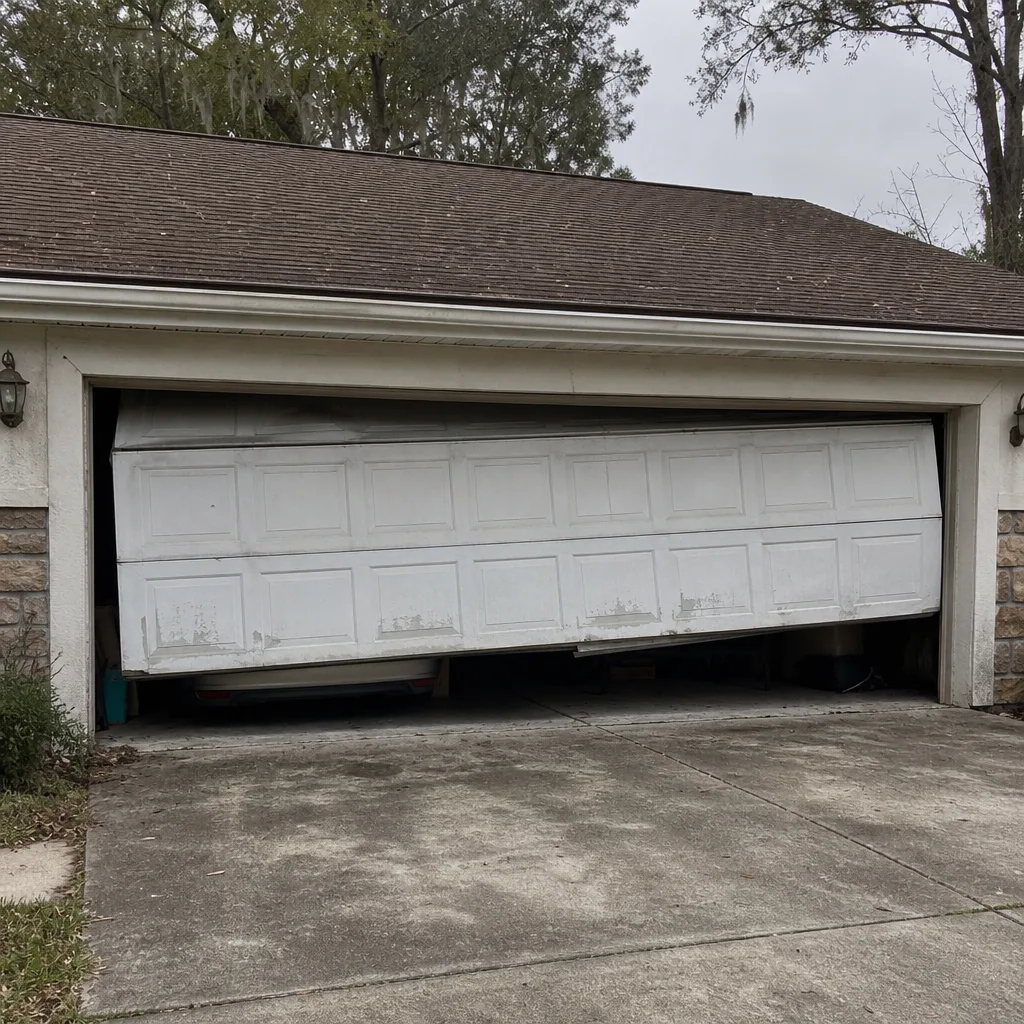
- A bang followed by the door not lifting, or a door sitting visibly crooked on its cables. That’s almost always a broken spring or a slipped cable.
- A cable that has come off the drum and is hanging loose along the side of the door. That cable can whip, and the door can fall.
- The door hanging open and not staying up, or the door coming down on its own when it reaches the top.
- A visibly bent track that the door is barely fitting into, or a door that has come off its hinges on one side.
- Anything that smells like burning from the opener motor or the wall control.
Schedule a repair in the next few days if you notice:
- Uneven lifting with a small visible gap difference, no bang, and the door still closes under its own power.
- A grinding or squealing sound that hasn’t gotten noticeably worse since you first heard it.
- One safety sensor LED flickering but the door still reverses and closes normally.
- Aging rollers that squeak mildly and roll without binding.
- Rust bloom on the springs without any visible deformation of the coils.
The unsafe items are unsafe for a reason. A garage door weighs a few hundred pounds in most residential installations, and the springs that hold that weight carry real stored force. A failure under load can send a door crashing or a spring whipping across the garage, and we’ve seen enough of those events to treat them with respect. When a homeowner asks whether they can run the opener “just one more time” to see the problem, the answer is almost always no.
If you’re not sure which side of that line your door is on, call and describe it. We can usually tell from a two-minute phone conversation whether you need emergency service or a scheduled visit, and we’d rather hear from you at the “unsafe” stage than the “door has been stuck open for two days” stage.
The 60-Second Weekly Check Routine
Before you pull the car in, spend 60 seconds on a quick visual and motion check. It’s the equivalent of glancing at a tire’s sidewall before a road trip: the tires tell you about the drive, and the door tells you about the springs, cables, and opener. Think of it as a five-point preflight.
- Watch the door go up. Stand at the side of the door, not underneath it, and watch the top edge for an even lift. Look at the gap on each side. A little of one side higher than the other at full open may be normal. Uneven lifting through the whole travel is not.
- Watch the door come down. The door should descend smoothly and stop with the bottom seal flat on the floor. Any drift back down after the closure, or a corner lifting a few inches while the opener thinks the door is closed, is a warning sign.
- Listen while it’s moving. A normal door is quiet. A bang, a grind, or a scraping from the ceiling is worth noting, and the specific sound tells your tech a lot about where to look.
- Check the safety sensors. Both sensor LEDs should be steady. Wave a hand in front of the sensor while the door is closing; it should reverse on contact. If it doesn’t, that’s a same-week fix.
- Look at the springs and cables. From the floor, look at the torsion springs and the cables along each side. Any visible rust on the coils, a loose cable hanging off the drum, or a spring that looks bent in one section is worth a phone call.
Once a month, add a fourth check: look at the bottom seal. A garage door bottom seal along Ocala’s concrete floors takes a lot of abuse, and a swollen or torn seal is visibly obvious when you crouch down next to it. If the seal is pulling away from the panel or feathered out on one side, note it and have it replaced at the next tune-up.
When a Warning Sign Means Call a Professional
Some of these signs are safe to schedule. A few are not, and the difference matters. Call us today if you have a broken spring, a slipped or loose cable, a door that has come off its track, a door hanging crooked or refusing to close, or a garage door that’s been stuck open overnight. Call us today for problems with LiftMaster or Chamberlain safety sensors that won’t reset after a clean, or when the opener’s error code doesn’t match anything in the manual. We handle emergency garage door service for problem calls like these, and our technicians are trained to work on the brand already in your home so the parts and expertise are right the first time.
The scheduled side of things is just as important. Book a repair visit for uneven lifting, grinding, hesitation, or a slow-drifting door. Book an inspection for an older door that has never been serviced, or for one with rust blooms on its springs. Renters, note it and tell your landlord. Property managers, treat this as a maintenance item rather than a call-center escalation; a $150 tune-up prevents a $500 emergency and the tenant complaints that go with it.
If you’d rather have a specialist look at it before deciding, the team at Ocala Garage Door Repair Pros offers free estimates in Ocala and a written price before any work begins. The quote you agree to is the price on the invoice.
Common Mistakes to Avoid
- Running the opener to “test” a broken spring. If the spring is already gone, each attempt loads the opener’s gear and can strip it, turning a spring repair into a spring plus opener repair. Stop and call.
- Lubricating the entire mechanism because a roller squeaks. Grease on the tracks attracts Florida grit and gum, and the door gets worse, not better. Lubricate the rollers and hinges with a product made for garage doors, and leave the tracks dry.
- Assuming “it’s just a bent panel” and driving through the middle. A bent panel often means the door is out of alignment. If the opener is struggling to lift it, the spring is probably part of the story.
- Ignoring rust on a torsion spring because the door still works. Rust-pitted wire fails suddenly, and failure tends to happen when the door is loaded mid-travel rather than closed at rest.
- Letting a swollen bottom seal ride for another year. Here in Ocala’s humidity, the seal absorbs moisture and swells, distorts the bottom panel, and lets water and pests in. A seal swap is a modest repair; a bottom panel is not.
- Tightening the springs or cables yourself after watching a video. High-tension springs hold serious stored force. The right tooling and technique are the reason a trained technician can do it safely and a homeowner shouldn’t try.
- Replacing the whole door because the opener is misbehaving. Many “dying doors” are actually an opener with a sensor alignment issue or a limit adjustment problem. Get a diagnostic before you price a new door.
If you have any doubt about a sign you’ve noticed, our team is happy to talk it through. We’d rather have a short conversation about a squeak than a call about a door that came off its track.
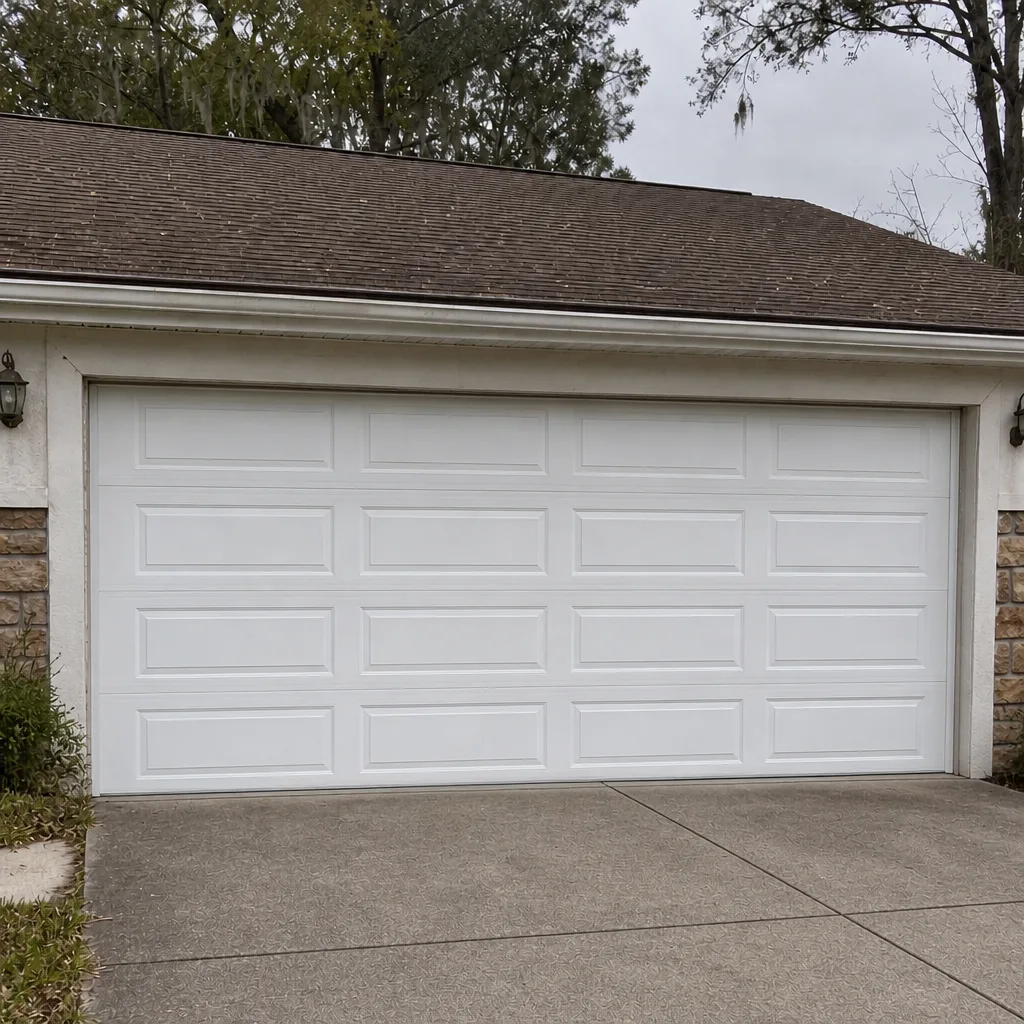
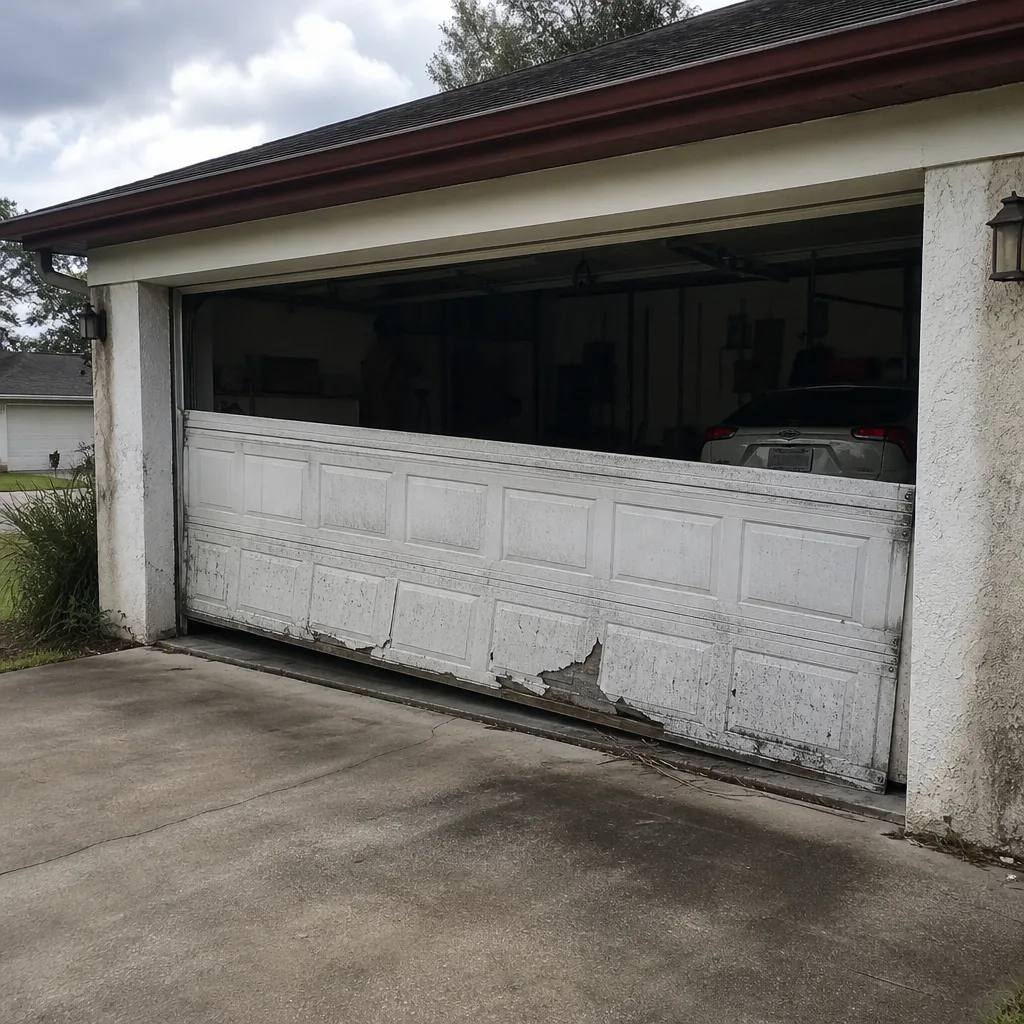
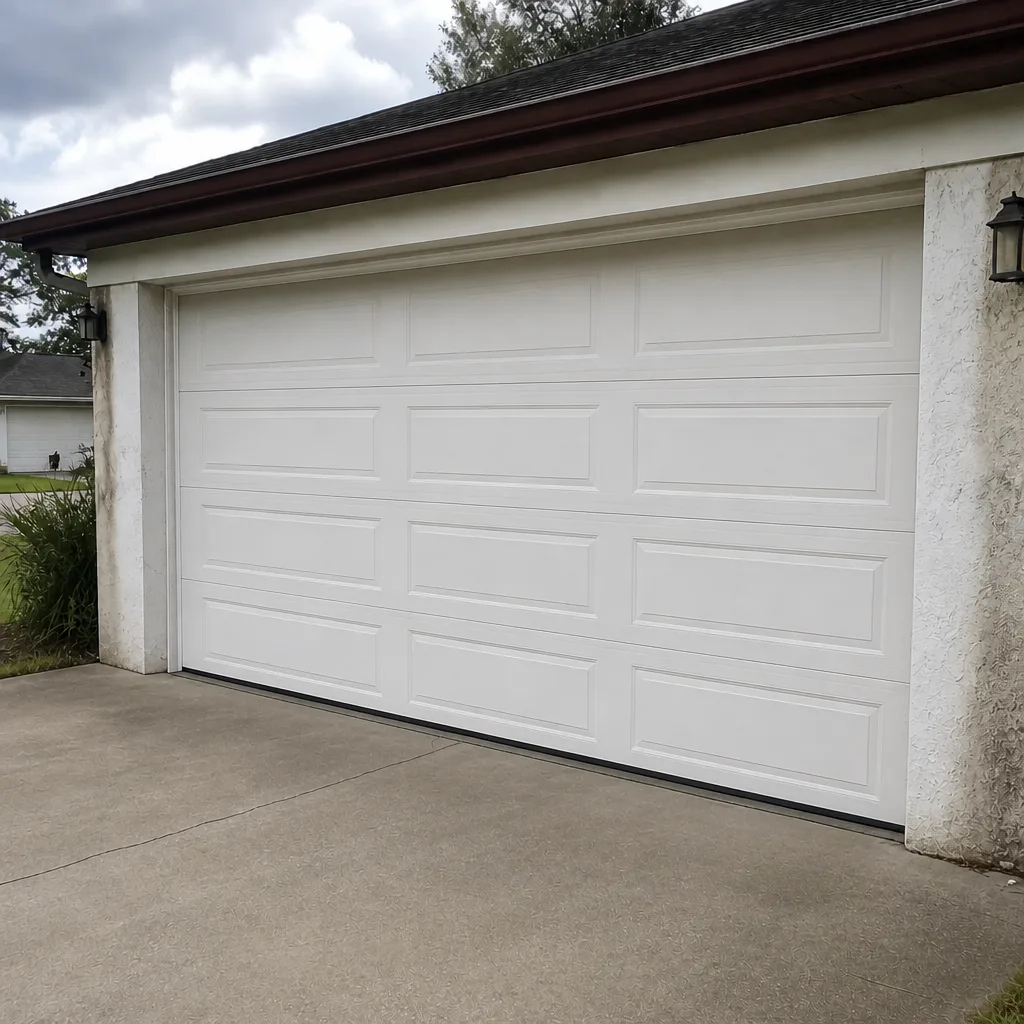
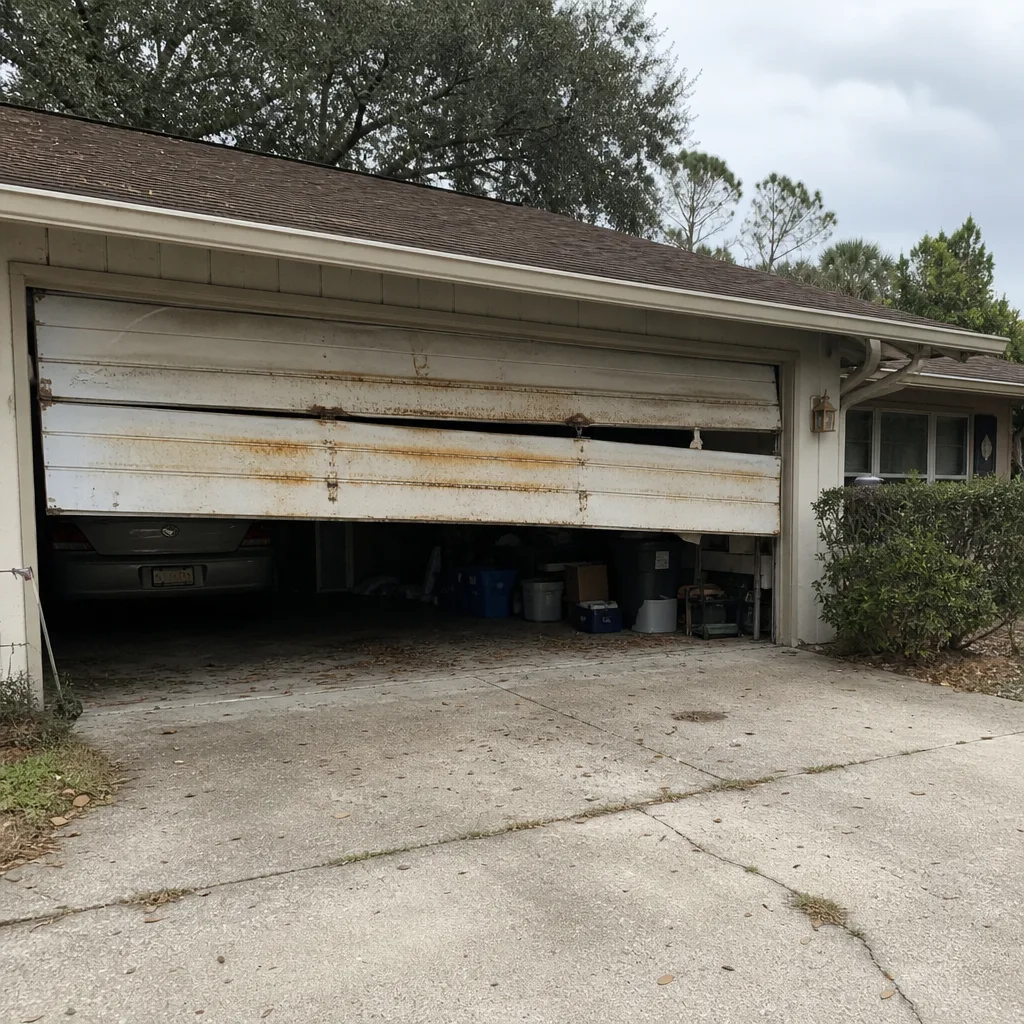
See the difference
 Before
 After
 Before
 After
 Before
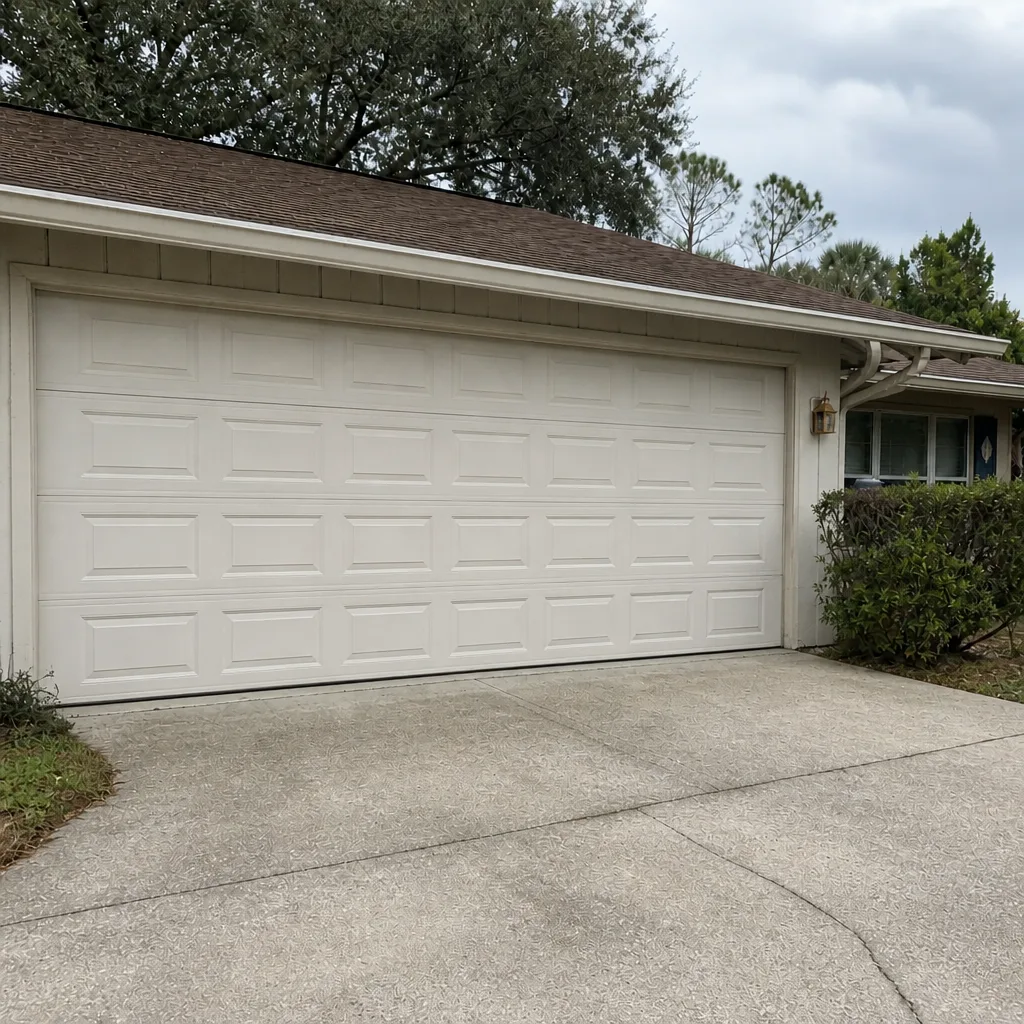 After
When to Call a Professional
Call a professional if the door is crooked, if a spring has visibly snapped, if a cable has come loose, or if the door has come off its track. Those are not DIY projects, and they’re not jobs for a general handyman who doesn’t specialize in garage doors. Call for a scheduled repair if you notice uneven lifting, grinding, or an opener that hesitates at the top. Call for an inspection if you have a door that’s been running for a while without service, or if you’ve seen rust on the springs. Ocala Garage Door Repair Pros offers free estimates in Ocala. Call (844) 497-0351 and we’ll talk through what you’re seeing, then give you a written price before any work starts.
Frequently Asked Questions
The most reliable early signs of a failing garage door spring are uneven lifting, a door that gets heavier toward the top of its travel, and a dull rust bloom on the coils. You may also hear a light popping or creaking sound during the first few feet of lift as the spring struggles to hold its charge. Any of these is a reason to book a professional inspection before the spring fails outright.
No. Do not use the door and do not run the opener. A broken torsion spring means the door’s full weight is on a system that can’t safely support it, and every cycle stresses the opener and the door’s hinges. Call us at (844) 497-0351 and we’ll book emergency garage door service for it.
A door that opens a few inches and stops is usually hitting a travel limit setting, a force sensor trip, or a safety sensor that’s misaligned. On LiftMaster and Chamberlain units the console typically flashes a sensor code, and the cause is often the safety beam. If the sensors’ LEDs are both steady and cleaned, the opener’s travel limits probably need adjustment.
A typical garage door repair in Ocala runs a small service-call price range for a simple sensor re-alignment or roller swap, and higher for a spring repair or track realignment. Every job varies with the brand and the parts involved, so we quote it after we look at the door. Call (844) 497-0351 for a free estimate; the written price is the price.
On LiftMaster and Chamberlain openers, the number of flashes on the console corresponds to a specific fault code in the owner’s manual. Common patterns: one or two flashes usually points to a safety sensor issue, a rapid sequence typically indicates a wiring fault in the wall control. A Genie unit uses a slightly different light pattern. Bring the flash count with you when you call.
A service visit is scheduled work: tune-up, repair, or a diagnostic that isn’t time-sensitive. An emergency call is a door that’s stuck, unsafe, or off its track and needs attention right away. At Ocala Garage Door Repair Pros, both are the same team and the same specialists; the emergency side is just the faster route when the door can’t wait.
The Bottom Line
Garage door failures are usually predictable. Uneven lifting, drift, grinding, rust on the springs, and the small warning flashes on your opener console are all a door telling you that a spring, cable, or alignment problem is already underway. Reading those signs correctly lets you book a normal repair instead of an emergency visit, and it’s the difference between a small service bill and a door replacement. Run the 60-second weekly check before you enter the car. When you’re unsure, call us and describe what you’re seeing. Our technicians have up to 14 years of experience with the brands that live in Ocala homes, and we’d rather help you prevent a failure than rush one through afterward.
If you’ve heard a bang, seen a bend, or noticed a drift, don’t wait for the next sign. Call (844) 497-0351 for a free estimate. Same-day and emergency service is available, we work on the brand already in your home, and every quote is agreed on before any work begins.
Written by the team at Ocala Garage Door Repair Pros.